
Last updated November 17, 2026
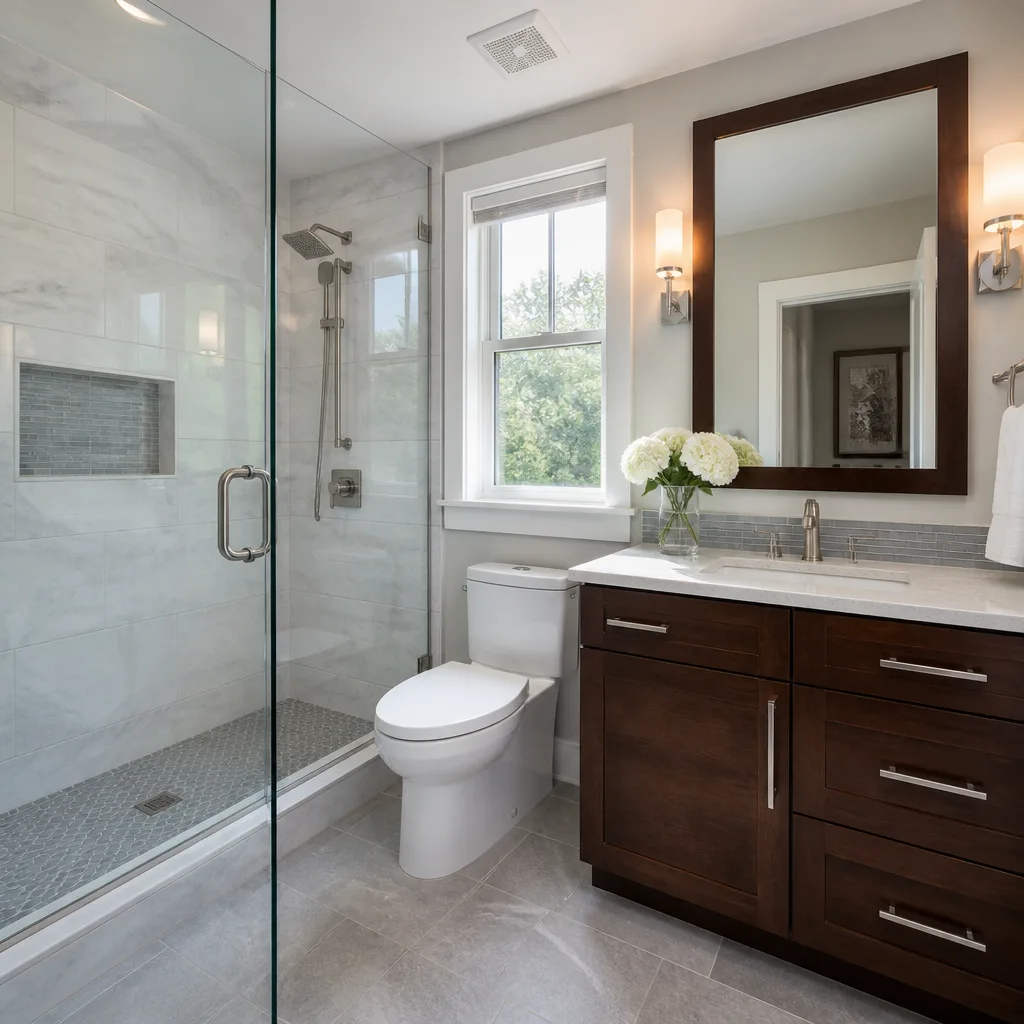 Bathroom remodeling
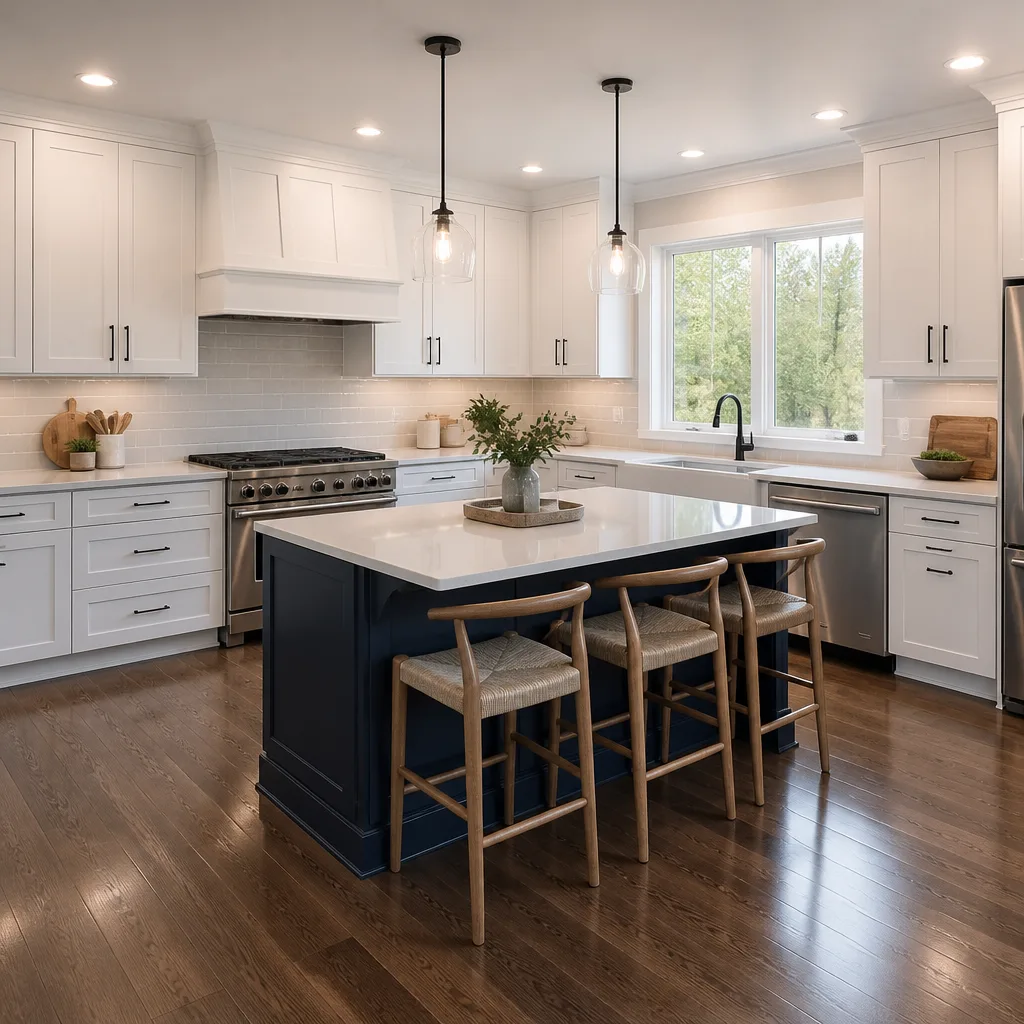 Kitchen remodeling
 Home additions & ADU
 Roofing
 Windows & doors
 Driveway & pavers
 Fence
Free written scope consultation - allowances, timeline, and change-order rules on paper before a single trade is scheduled
How Long Does Bathroom Remodeling Take? Timelines and What to Expect
A bathroom remodel that takes three weeks in Phoenix can take six in Miami Gardens. Not because crews here work slower, but because the permit office, the inspector’s calendar, and the lead times on impact-rated materials all run on a different clock than the national timeline charts you’ll find online. Most of what actually stretches a bathroom project past its promised date is predictable, and it’s the stuff nobody puts in the written timeline.
This guide breaks down realistic phase-by-phase day counts, explains the Miami-Dade permit and inspection factors that seasonal articles ignore, and shows you how to spot a quoted timeline that’s a sales number rather than a working one. If you’re planning a bathroom remodel in Miami Gardens, this is what to plan around.
Quick Answer
A full bathroom remodel in Miami Gardens typically takes five to eight weeks of working time, and seven to ten weeks on the calendar once you add Miami-Dade permit approval and inspection scheduling. A cosmetic refresh (paint, fixture swaps, no moving walls) can run two to three weeks. A layout-change remodel with relocated plumbing can stretch to ten or twelve weeks. The single biggest swing factor is whether your fixtures and tile are in stock locally or ordered.
Styles & brands we work with
- Kitchen remodeling
- Bathroom remodeling
- Home additions & ADU
- Roofing
- Windows & doors
- Driveway & pavers
- Fence
Table of Contents
- What actually drives your bathroom remodel timeline
- The realistic phase-by-phase timeline, with day counts
- How Miami-Dade permits and inspections add days
- South Florida lead times: what’s in stock vs. what gets ordered
- Cosmetic refresh vs. full gut vs. layout change
- Red flags that your quoted timeline is a sales number
- Questions to ask before you sign
What Actually Drives Your Bathroom Remodel Timeline
Ask five contractors how long a bathroom takes and you’ll get five answers, because each is quoting a number for a different job. The real timeline is the sum of a few moving parts: the scope you actually chose, the permits the job triggers, how fast materials arrive, and how quickly a Miami-Dade inspector can get out to sign off on the rough-in before tile goes down.
The scope is the one homeowners most often misjudge. A job described as “just a bathroom update” can mean two completely different projects. A cosmetic refresh touches surfaces and fixtures. A full gut rebuild moves the room back to studs and back up again. Same room, same square footage, very different calendar.
Then there’s the physical reality of older homes around Miami Gardens. We’ve opened walls in homes near Norwood and found cast iron that looks fine until it has to tie into new PVC, or a venting setup that doesn’t match what’s on the plan. That’s not a contractor stalling. It’s a discovery that has to be handled correctly and, often, inspected.
Materials matter just as much. The fixtures and tile you fall in love with may be sitting in a Doral warehouse or three weeks out from a factory. That difference alone moves your start date by half a month. When everything is in writing before the job starts, including which items are in stock and which are ordered, the timeline becomes a schedule instead of a wish. That’s also why we put every allowance on paper: an allowance that isn’t on paper is a surprise waiting for a date.
One more factor specific to this market: the rainy season from June through September adds humidity and slows certain curing and waterproofing steps. Membranes and thinset need the right conditions to cure before you cover them. A contractor who builds that into the schedule is telling you the truth.
The Realistic Phase-by-Phase Timeline, With Day Counts
Below is where a standard full bathroom remodel spends its time. These are working-day figures for a typical hall bath or primary bath in a Miami Gardens home, and they assume materials are on site when the phase starts. Add the permit and inspection time covered in the next section on top of this.
- Demolition and haul-off: 1 to 2 days. Fixtures, tile, drywall come out; debris goes to the dumpster. A surprise like a hidden water leak or a load-bearing wall under old tile adds time.
- Rough-in (plumbing and electrical): 2 to 4 days. New drain and supply lines, valve locations, venting, and electrical for lights, exhaust, and outlets. This is the phase that must be inspected before it’s covered.
- Inspection window: varies, see below. The rough-in inspection clears the plumbing and electrical before wall close-up.
- Insulation, blocking, and drywall: 2 to 3 days. Includes the backer board that waterproofing depends on.
- Waterproofing and curing: 1 to 2 days. A critical step people skip in their mental math. The waterproof membrane has to cure before tile.
- Tile and setting: 4 to 6 days. Floor, walls, shower pan, and grout, with cure time between stages. Specialty or large-format tile runs longer.
- Fixtures and trim: 2 to 3 days. Toilet, vanity, faucets, shower door, lighting. Premium fixtures we install, like Grohe shower valves, go in cleanly because the rough-in was measured to them.
- Paint, caulk, and punch list: 2 to 3 days. Final touch-ups and the walkthrough where we make a written list and finish it.
Add it up for a standard full bath and you land around five to six weeks of working time. Layout changes, hidden damage, and material delays are what push it to eight.
How Miami-Dade Permits and Inspections Add Days No National Article Mentions
Here’s the part every generic timeline chart leaves out. In Miami-Dade, a bathroom remodel that moves plumbing, electrical, or walls requires a permit, and the permit comes with an inspection sequence: rough-in first, then final. Each inspection has to be scheduled, and the inspector’s calendar is not yours to command.
How that lands in practice:
- Permit approval before work starts. The county reviews the plan and issues the permit. A straightforward bathroom is often quick, but a relocated drain or a wall change can trigger a second look. Budget a week-plus for this before demo ever begins.
- Rough-in inspection. Once plumbing and electrical are in the open wall, the inspector signs off before it’s covered. Schedule gaps here can cost several days. A crew that calls for the inspection the moment the rough-in is ready, rather than at the end of the week, saves real time.
- Final inspection. After fixtures and finishes, the final sign-off closes the permit. If anything the inspector flagged on the rough-in wasn’t corrected properly, this is where it shows up.
The permit inspector works for you, not for the contractor. That’s why we like him. A job that passes inspection with clean paper is a job you can sell later without a problem, and a lender or buyer will ask. Skipping the permit to “save time” is the fastest way to turn a bathroom into a resale headache. Every eligible job we take on gets the permit pulled and the inspections signed. If a contractor tells you permits are optional, that’s your signal to keep calling.
One local note: permit volume around Miami Gardens and the surrounding corridor can slow the office during busy stretches. Building in a cushion for scheduling, rather than promising a date that assumes the inspector shows up tomorrow, is how a working timeline gets built.
South Florida Lead Times: What’s in Stock vs. What Gets Ordered
This is where a bathroom project either rolls or stalls. The tile and fixtures you pick determine whether you start on time or wait. Some items are on a shelf in South Florida today. Others are three weeks out.
Generally speaking:
- In stock locally and ready now: standard porcelain and ceramic tile, common vanity sizes, basic faucets, and standard toilets. Your typical homestore selection ships fast.
- Short order, one to two weeks: mid-range vanities, popular shower systems, and stock glass doors.
- Longer order, two to five weeks or more: specialty or large-format tile, custom vanity dimensions, imported stone countertops, and unusual fixture finishes. Custom glass shower enclosures are cut to the finished opening and ordered after rough measurement.
That last point traps a lot of homeowners. A frameless glass shower door can’t be measured until the tile is set, then it gets fabricated, then it’s installed. It’s a real step in the sequence, not an add-on, and it has its own lead time. We plan the schedule around it rather than discovering it at the end.
There’s also a South Florida angle most timelines skip: impact-rated exterior products and coastal-grade finishes can be on a different supply clock than the standard catalog. When you’re picking premium brands, you’re not dealing with mystery brands off a van, you can look them up and know exactly what’s coming and when. Choosing a Sterling tub or shower surround, for example, means checking the actual availability on that model before we lock a start date into the contract.
We’ve seen a bathroom held up two weeks because a tile the homeowner loved was special-ordered and the order had been placed on the wrong lot number. That’s a schedule problem you fix on paper at the start, not in the middle.
Cosmetic Refresh vs. Full Gut vs. Layout Change: Why the Three Get Confused
This confusion is where budgets blow up and timelines get quoted wrong. Knowing which of the three you’re actually buying is the single most important decision before you sign anything.
- Cosmetic refresh (2 to 3 weeks). Paint, reface the vanity, swap the faucet and shower head, new mirror and lighting, maybe re-grout. No walls open, no plumbing moved, usually no permit. Fast and predictable. The catch: it can’t fix a leaking valve behind the wall or a layout that doesn’t work.
- Full gut and rebuild (5 to 8 weeks). Down to studs, new backer board and waterproofing, new tile, new fixtures, often new plumbing rough-in in the same locations. This is a permit-and-inspection job and requires a temporary bathroom plan for the household while it runs.
- Layout-change remodel (7 to 12 weeks). Everything in a full gut, plus moving the toilet, sink, or shower drain. Relocating a drain is the expensive, slow part because it means cutting into the slab or floor and reworking the plumbing that feeds the whole room. It also usually means a longer permit review.
The misstep happens when a homeowner budgets for a cosmetic refresh and discovers mid-project that the layout needs to change. Now you’re paying for a gut remodel, and the schedule you were promised for a refresh no longer matches the work happening in your house. The honest move is to define the scope before pricing it, and to make sure any change in scope arrives as a written change order before the work happens.
Because Miami Gardens homes vary a lot in age and construction, we measure and open careful inspection before committing to a scope. It’s cheaper to find out on day one which category your job is than on day fourteen.
Red Flags That the Quoted Timeline Is a Sales Number, Not a Working Number
A timeline that sounds too good is usually a timeline built to win the job, not to build the bathroom. Here’s how to tell them apart before you hand over a deposit.
- “Two weeks, guaranteed.” Almost no permitted full bathroom gets done in two weeks with inspections and cure times honored. If the number ignores the permit and waterproofing steps, it’s a sales figure.
- No written schedule at all. A working timeline is broken into phases with dates. A verbal “about a month” is not a schedule.
- Permits framed as optional or as a cost add-on. “We don’t need a permit for this” on a job that moves plumbing is a warning. It shifts risk onto you.
- No allowance detail. If the tile and fixture budget is a single lump without specifying what’s in stock versus ordered, expect the number to move.
- Change orders that arrive after the fact. Price changes should show up in writing before work proceeds, not as a line on the final invoice.
- Vague answers about the inspection schedule. A contractor who can’t tell you roughly when the rough-in inspection gets called hasn’t planned the job.
We’ve seen the difference up close. When a crew plans the inspection and materials around the actual job, the timeline holds. When a competitor quotes a fantasy date and then a national-style outfit hands over a bigger bill at the door, homeowners get stuck paying for the gap. That’s the exact reason we keep scope and allowances in writing and issue a written change order before any scope change touches the job.
Questions to Ask Before You Sign
The best way to protect your timeline is to ask the right questions before any paperwork is signed. A contractor who answers them clearly is planning; one who dodges is selling.
- Is this a permit job, and who pulls the permit? The answer should be the contractor, and the permit should be in the scope. Ask who signs the inspections.
- Can I see the phase-by-phase schedule in writing? You want dated phases, not one total.
- Which fixtures and tile are in stock, and which are ordered? Get it itemized. Long-lead items should be flagged with a date.
- What’s the contingency if the wall opens and finds damage? How will it be priced, and how will it change the schedule, before the work continues?
- Is there a written change-order process? Every price and scope change should come to you in writing for approval first.
- What’s the warranty on the finished work? Ours is the written 90-Day Done Right Promise on every construction and remodeling job.
Ask anyone on your street, or look the contractor up yourself. A company that publishes its name and license number is inviting you to verify, and that’s the kind of accountability that keeps a timeline honest. We answer our own phone with a live person, day or night, and the estimate is free.
If the bathroom is part of a bigger plan for your home, the same scheduling logic applies to larger work. You can see how we approach additions and layout changes on our Home Additions & ADU in Miami Gardens page, and if the project includes outside upgrades like a new walkway or patio, our Driveway & Pavers in Miami Gardens work runs to the same written-schedule standard. Fencing around the work area is another common add-on, covered under Fence Installation in Miami Gardens. Everything we do starts from the same place, which you can read about on our Barrett & Sons Construction Miami Gardens home page.
Common Mistakes to Avoid
- Picking tile before checking lead time. The beautiful specialty tile you chose may be three weeks out. Confirm availability before you set the start date.
- Planning the schedule around a shower glass order placed late. Custom glass is measured after tile and fabricated after that. It belongs on the schedule from day one, not discovered at the end.
- Assuming a permit isn’t needed. In Miami-Dade, moving a drain or opening a wall usually triggers one. Skipping it can sink a future sale.
- Confusing a cosmetic refresh with a full remodel on the bid. Match the scope you’re buying to the timeline you’re quoted, or the schedule will drift.
- Leaving a second bathroom out of the plan. If this is the only bath, line up an interim plan for the weeks it’s out of service, or you’ll rush the work and skip cure times.
- Falling for the two-week promise. A real bathroom with inspections and cure times doesn’t finish that fast. A timeline that does is a number built to close a sale.
- Signing a change-order-less contract. Anything not written will cost more later. Get every price change in writing before it happens.
See the difference
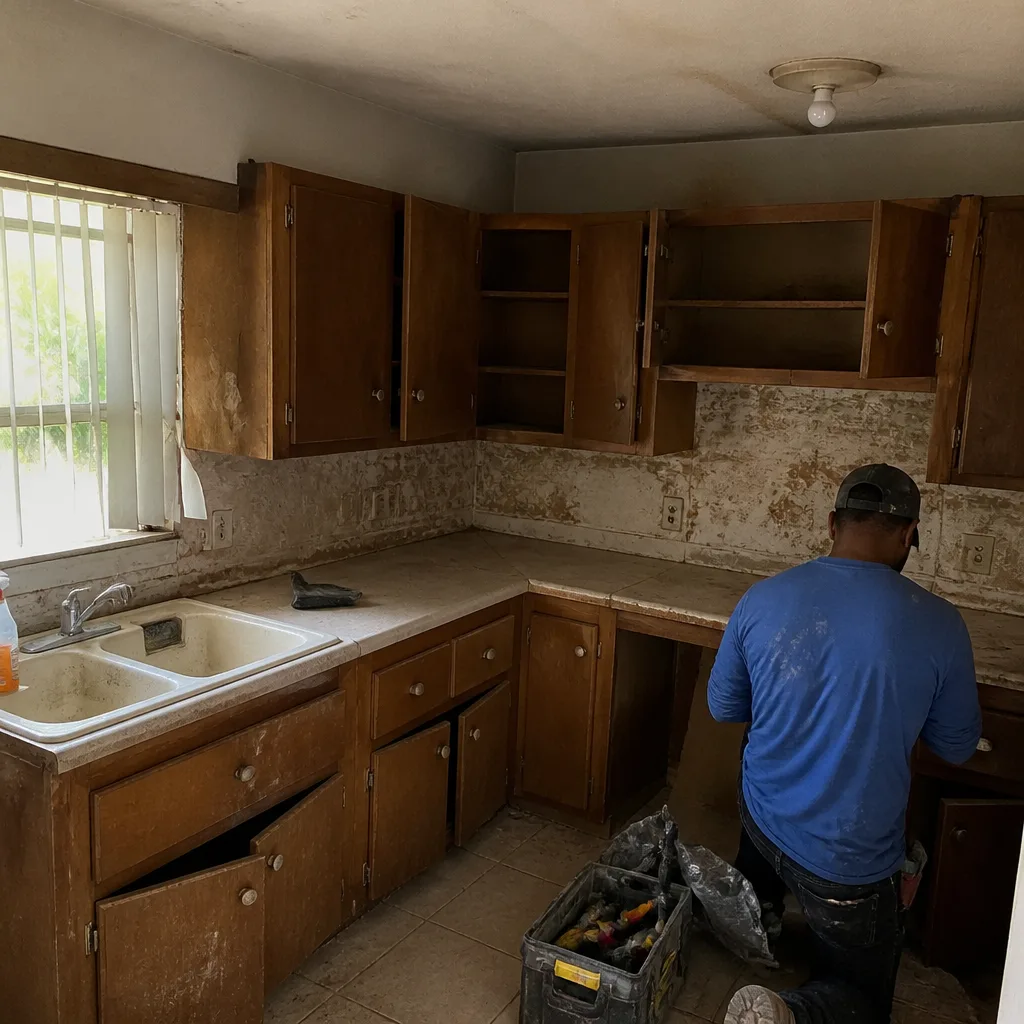 Before
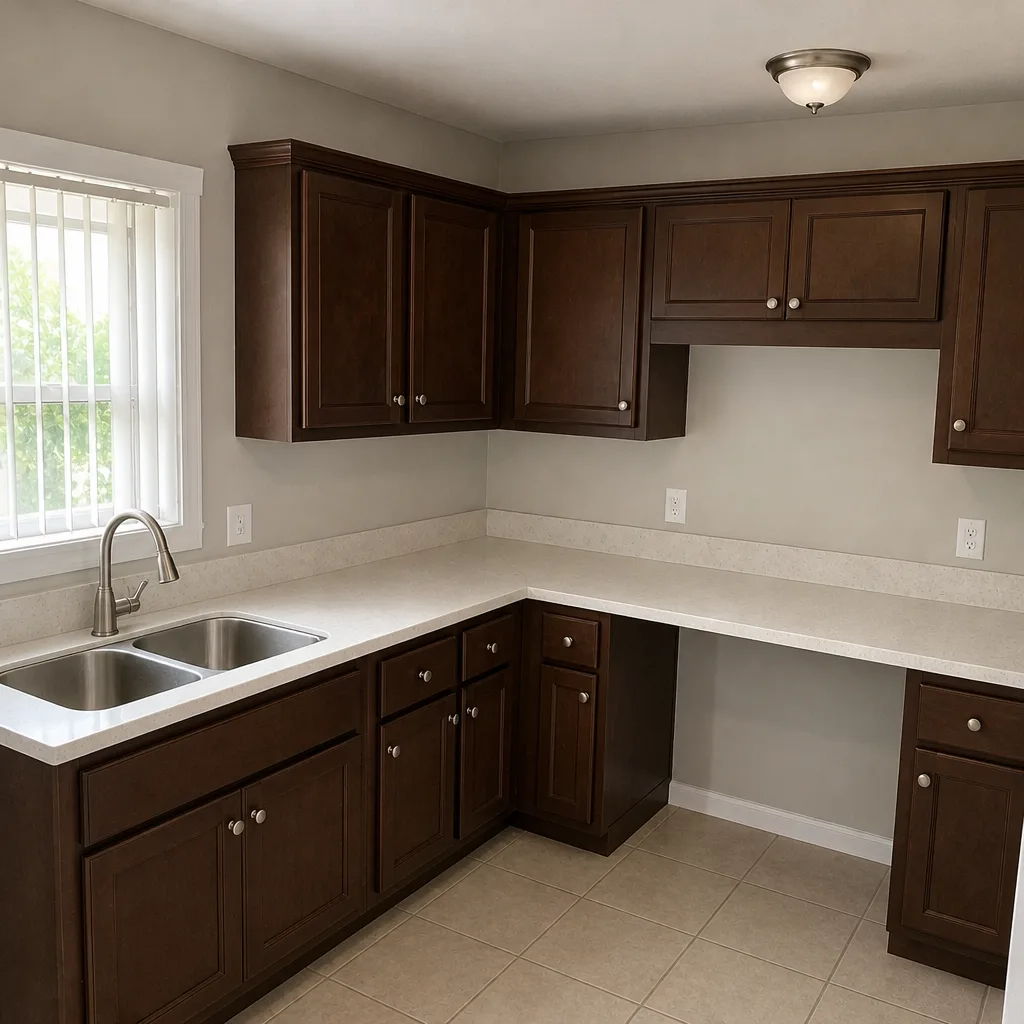 After
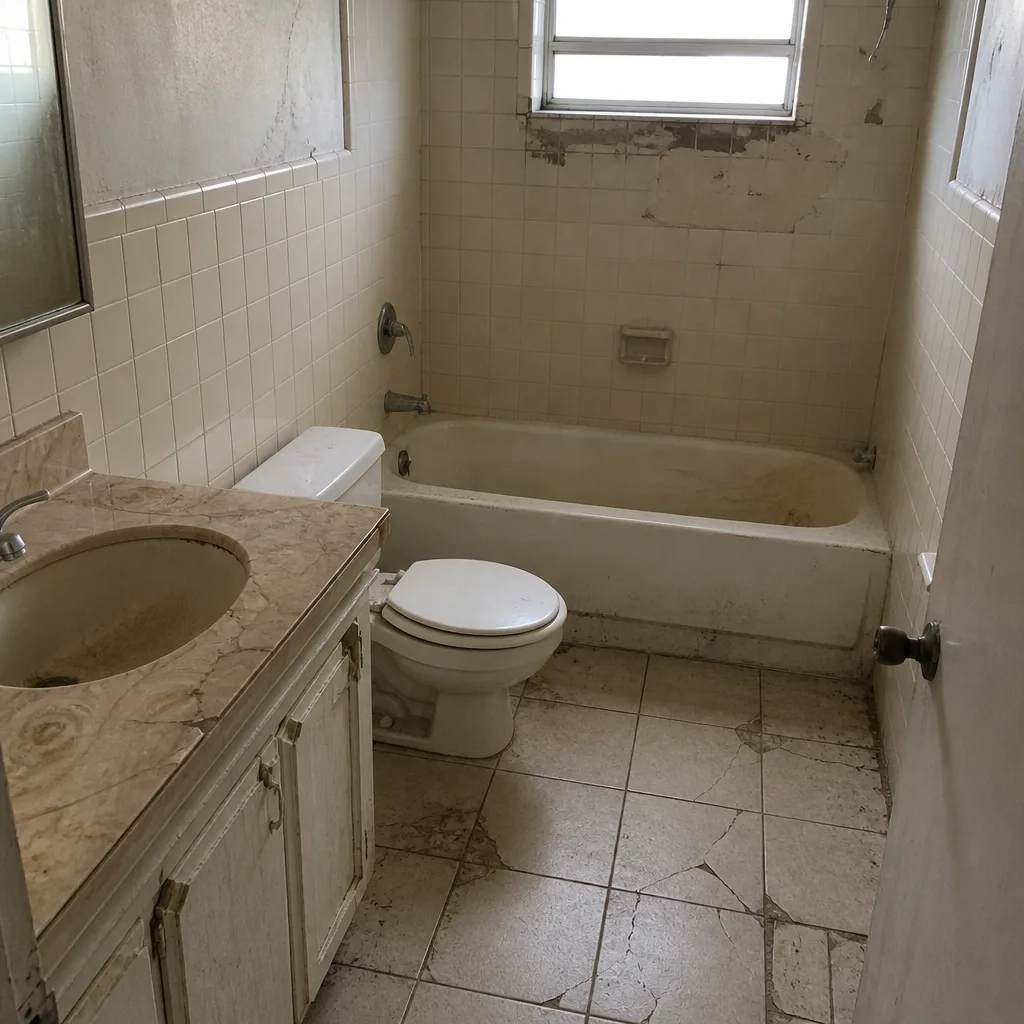 Before
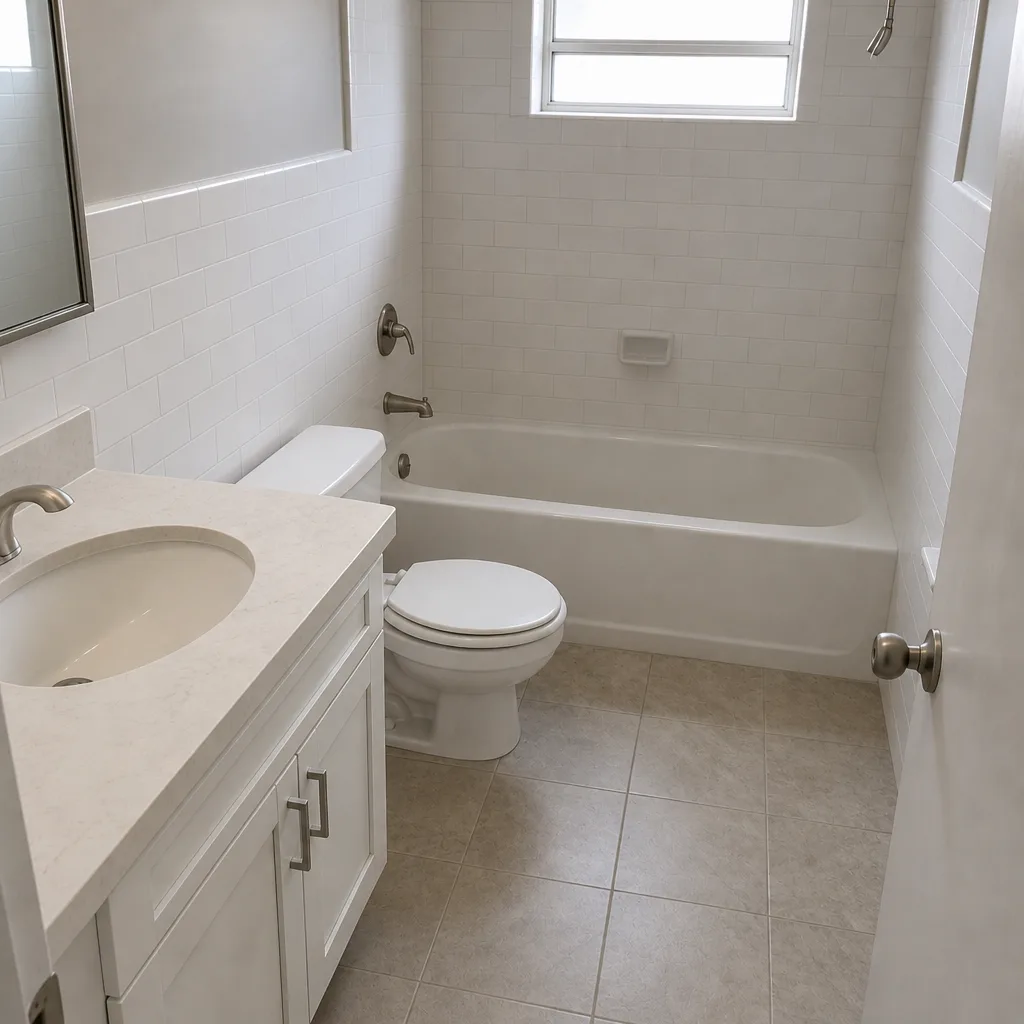 After
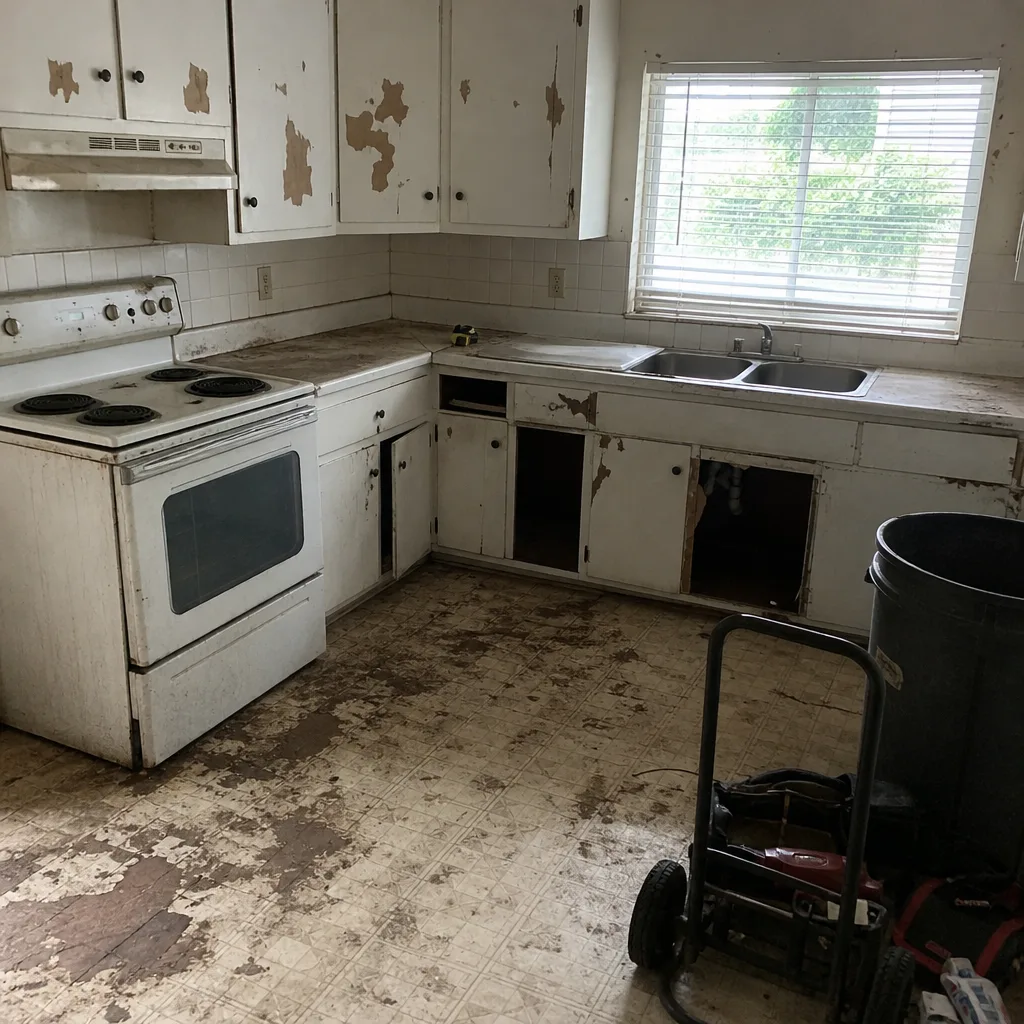 Before
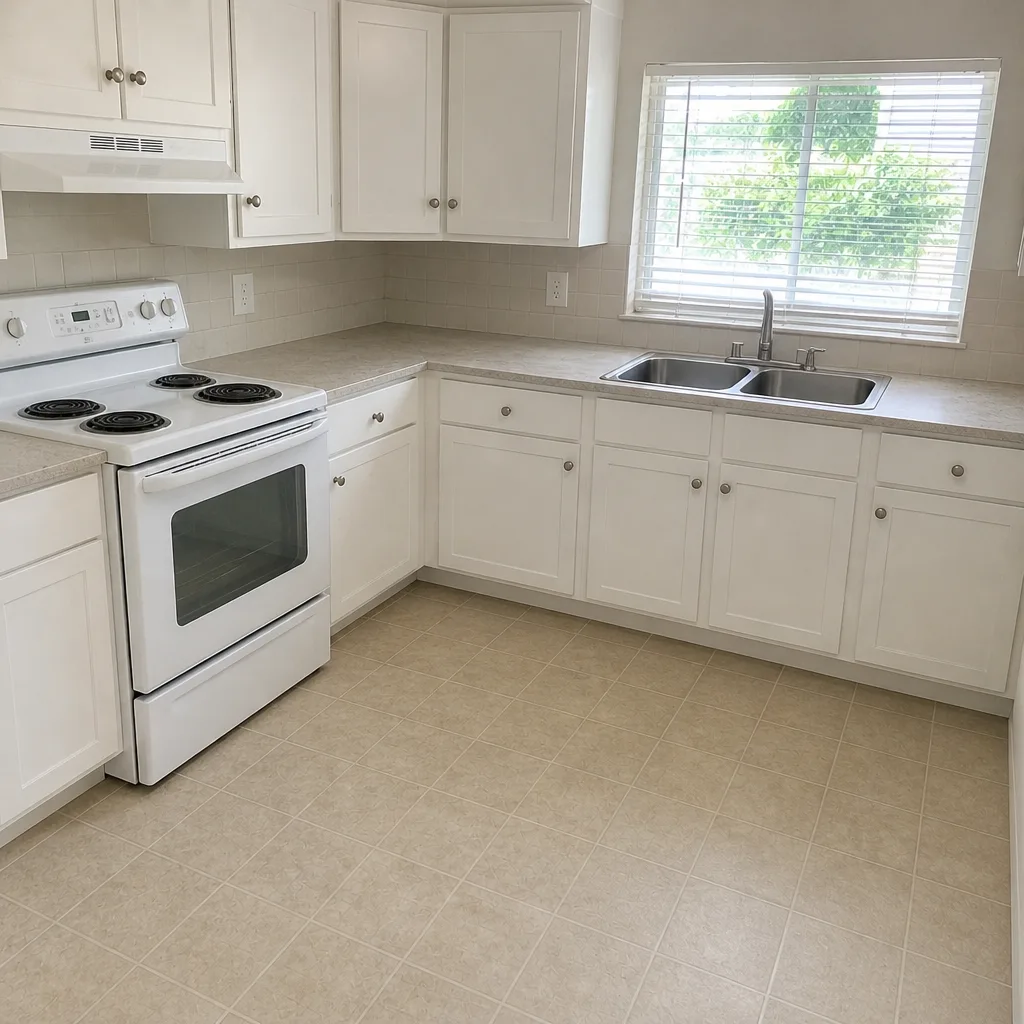 After
When to Call a Professional
Some of this work isn’t worth teaching yourself. Moving a shower drain, reworking the electrical behind the vanity, opening a wall, and tying into the plumbing are jobs that need a permit, an inspection, and someone who knows what’s behind an older Miami Gardens wall. If your fixture purchase is stuck on a long lead time and you’re weighing options, or if a contractor’s timeline doesn’t add up and you want a second read, call us. A free second opinion on any written estimate is part of what we offer, and it costs nothing to have someone check the schedule and the scope before you sign.
Barrett & Sons Construction Miami Gardens offers free estimates in Miami Gardens and the surrounding communities – call (844) 797-8316 to schedule yours. We’re owner-operated, every eligible job gets the permit pulled and inspections signed, and every price change comes to you in writing before the work moves.
Frequently Asked Questions
A full bathroom remodel in Miami Gardens typically takes five to eight weeks of working time, or seven to ten weeks on the calendar once Miami-Dade permit approval and inspection scheduling are added in. Cosmetic refreshes run two to three weeks, and layout-change remodels with relocated plumbing can reach ten to twelve weeks. Call (844) 797-8316 for an exact timeline on your specific bathroom.
Yes, if the job moves plumbing, electrical, or walls, a Miami-Dade permit and inspections are required before the work is covered and again at the finish. Surface-only cosmetic work usually doesn’t trigger one. A contractor who tells you permits are optional on a plumbing change is putting the risk on you – call (844) 797-8316 to talk through your project.
Because each may be quoting a different scope, and only some build in permit and inspection time, cure time for waterproofing, and material lead times. A two-week quote often ignores the phases that take real days. Ask for a phase-by-phase schedule in writing. Call (844) 797-8316 for a free second opinion on any written estimate.
Hidden damage behind walls, long-lead specialty tile or custom shower glass, inspection scheduling gaps, and scope changes made mid-project are the usual culprits. Most are preventable when the scope, allowances, and change-order process are in writing before work starts. Call (844) 797-8316 – estimates and second opinions are free.
Yes, in most cases, though a full gut of your only bathroom means you’ll need an interim plan for a few weeks. If you have a second bath, the disruption is mostly dust and traffic. Plan the household around the weeks the room is out of service. Call (844) 797-8316 to plan the schedule around your household.
A cosmetic refresh updates surfaces and fixtures without opening walls and is done in two to three weeks; a full remodel goes to studs with new waterproofing, plumbing, and permit inspections and takes five to eight weeks. Confusing the two is how budgets blow up. Call (844) 797-8316 to nail down your scope before you price it.
The Bottom Line
A bathroom remodel timeline is not a single number. It’s the sum of your scope, your permits, your inspection schedule, and your material lead times, and those last three run differently in Miami Gardens than the national guides assume. Plan for five to eight weeks of working time on a full bathroom, add permit and inspection days, and treat any two-week promise as a sales figure rather than a schedule. The best protection is a written phase-by-phase plan, itemized allowances, and a change-order process you control. Barrett & Sons Construction Miami Gardens puts all of that in writing, pulls the permits, and answers the phone with a live person. Call (844) 797-8316 to schedule your free estimate.
Written by the team at Barrett & Sons Construction Miami Gardens.