
Last updated November 17, 2026
 Bathroom remodeling
 Kitchen remodeling
 Home additions & ADU
 Roofing
 Windows & doors
 Driveway & pavers
 Fence
Free written scope consultation - allowances, timeline, and change-order rules on paper before a single trade is scheduled
Bathroom Remodeling Warning Signs Every Homeowner Should Know
The contractor who gives you a verbal estimate on a napkin isn’t being casual and confident. He’s setting up a situation where every cost overrun is your word against his, and you’ll lose that argument every time. That’s not how legitimate construction works, and it’s not how a remodel should feel. In Miami Gardens, where the market moves fast and hurricane-season moisture punishes shortcuts, the difference between a good bathroom and an expensive lesson gets decided before the first tile is laid. This guide walks you through the red flags to read before you sign, during the build, and at final walkthrough, plus the documentation habits that protect your money.
Quick Answer
The biggest bathroom remodeling red flags are a verbal-only price with no written scope, pressure to sign or pay a large deposit the same day, any claim that permits are optional, and vague phrases like “standard tile work” that leave room for endless add-ons. During the job, watch for crews with no lead on site, no posted permit, and change orders delivered by voice instead of in writing. If you see those, slow down before you hand over more money.
Styles & brands we work with
- Kitchen remodeling
- Bathroom remodeling
- Home additions & ADU
- Roofing
- Windows & doors
- Driveway & pavers
- Fence
Table of Contents
- Before You Sign: Pre-Contract Red Flags
- The Problem With “Standard Tile Work” and Vague Scope Language
- Permits: The Paperwork Most Contractors Skip
- During the Project: Warning Signs on the Job Site
- The South Florida “Hidden Water Damage” Scam
- What to Check in Finished Work Before Final Payment
- The Paper Trail That Protects You
- Common Mistakes to Avoid
- When to Call a Professional
Before You Sign: Pre-Contract Red Flags
Most of the damage happens in the conversation before money changes hands. In our experience across Miami Gardens remodels, the contractor who rushes the front end of the job is usually the one who dissolves when problems appear mid-build. Here are the signs to weigh carefully.
- Verbal-only pricing. If the number only exists in his head or on a business card, you have nothing to hold him to. Every line item, allowance, and unit price belongs on paper before you sign.
- Pressure to decide the same day. “This price is good until I leave the driveway” is a sales tactic, not a scheduling reality. Real contractors expect you to take a day or two to think.
- No mention of permits. In Miami-Dade County, a bathroom remodel that touches plumbing, electrical, or structural framing typically requires permits. A contractor who says “we don’t need permits for this” is either wrong or trying to avoid inspection.
- Large deposit with no written contract. Deposits are normal; deposits with no contract describing what they pay for are not. Florida caps how much a contractor can collect up front on residential work, so a demand for 50% cash before excavation is a warning.
- No physical address or license number on the estimate. Verify the license through the state database. If the paperwork doesn’t give you something to look up, don’t sign it.
- Cash-only and “no receipt needed.” Legitimate jobs produce invoices, receipts, and a paper trail for warranty and insurance purposes.
We want you to slow down here, because this is the part of the job you can actually control. The contractor who hands you a written line-item estimate, produces a license number you can look up, and tells you the permit will be pulled before the demo date is the one worth meeting again.
The Problem With “Standard Tile Work” and Vague Scope Language
Vague scope language is the single most expensive phrase in a bathroom remodel. “Standard tile work,” “builder-grade fixtures,” and “as needed” all sound reasonable in a conversation and become expensive arguments once the work is underway. The contractor gets to define “standard” later, and you’re the one paying for his definition.
Here’s a numbered way to tighten scope before you sign:
- Name the tile brand and line. “Standard tile” is not a specification. A specific brand, collection, and size is. Premium brands you can verify (we work with names like KraftMaid and Cambria in adjacent rooms, and equivalent grade fixtures in bathrooms) exist for a reason: they’re returnable, documentable, and stand behind their product.
- Set the allowance in writing. If the estimate says “$2,000 allowance for tile,” ask what happens if the actual pick costs $2,800. An allowance that isn’t on paper is a surprise waiting for a date.
- Define “unforeseen conditions.” Any honest contract has a clause for what happens when the wall opens up and reveals rot. The clause should say who pays, how much, and how the change gets approved before work continues.
- List the fixtures by model number. Sink, faucet, toilet, shower valve. Model numbers eliminate ambiguity and let you price-check the components yourself.
- Specify the finish schedule. Grout color, caulk color, hardware finish, trim profile. These are the details that turn into “we didn’t include that” unless they’re stated.
When we quote a bathroom in Miami Gardens, every line has a brand, a model, and an allowance attached. If a client upgrades mid-job, they get a written change order for the difference before the material gets ordered. That’s the pattern to demand of anyone you hire.
Permits: The Paperwork Most Contractors Skip
A permit is not paperwork that protects the contractor. It’s paperwork that protects you. The permit inspector works for the homeowner, not for the contractor, and that inspection is the only independent check that the plumbing behind the tile was done to code. When a contractor tells you permits are optional on a bathroom remodel, they’re telling you they don’t want the inspection.
What a properly permitted bathroom remodel in Miami-Dade County typically involves:
- Plumbing permit for relocating or replacing fixtures and drain lines, with a rough-in inspection before walls close.
- Electrical permit for new outlets, GFCI protection near water, lighting, and exhaust fan wiring, with the appropriate inspection.
- Mechanical permit when the job adds or replaces an exhaust fan or alters HVAC routing.
- Building permit for structural changes, wall moves, or shower pan replacements in many cases.
- Final inspection before the job is signed off.
We’ve watched Miami Gardens homeowners discover, three years after a remodel, that a shower pan was never permitted or inspected and now leaks into the subfloor with no recourse. Replacing that is more expensive than the original job. Pulling the permit is the cheap insurance. If a contractor pushes back on this, that’s your warning sign, and it’s usually the last one you need to see.
During the Project: Warning Signs on the Job Site
Once the crew arrives, the warning signs shift from paperwork to people and process. Watch for these during the first week.
- No lead on site. A crew with no foreman or lead carpenter means decisions get made at the wrong level and end up costing more. You want a name and a phone number of the person running the job, and you want to be able to reach them.
- No posted permit. Permits are supposed to be visible on-site during inspection periods. If you never see one, ask why.
- Change orders delivered by voice. “We need to add a couple hundred for the drain” is not a change order. Anything that touches price or scope gets written down before the work happens.
- New crew every few days with no handoff. Turnover is fine in some trades, but a bathroom is a tight sequence and each new set of hands needs a briefing.
- Demo day with no dust control. Plastic sheeting, negative air, and floor protection are the bare minimum when you’re cutting tile inside a home. If they show up with a sledgehammer and no plastic, expect your HVAC filter and every surface in the house to suffer.
- Disappearing acts. Two days of silence mid-job with no explanation is a cash flow problem dressed up as a scheduling problem.
None of these, on its own, is a disaster. A pattern of two or three at once is.
The South Florida “Hidden Water Damage” Scam
South Florida has a specific scam pattern that repeats every hurricane season. The contractor quotes low, wins the job, opens the wall, and announces “hidden water damage” that will double the bill. Sometimes it’s real. In our market it’s real often enough that homeowners can’t easily tell, and that’s exactly what makes the scam work. Rot behind a thirty-year-old tub surround in Miami Gardens is entirely possible after decades of humidity and daily use.
How to protect yourself:
- Require photo documentation. A legitimate contractor photographs the damage before it’s covered and shares the images with you along with a written change order.
- Ask for a second opinion on the change. If the number feels high, get a written second estimate. We offer a free second opinion on any written estimate for exactly this reason.
- Never accept a verbal “we found rot.” The wall stays open until the change order is signed and the camera has been used.
- Build a contingency into the original budget. Ten to fifteen percent set aside for unforeseen conditions removes the leverage of surprise.
If a contractor refuses to document hidden damage in writing and photos, he’s not solving a problem. He’s holding your job hostage.
What to Check in Finished Work Before Final Payment
Final payment is your last leverage. Use it. Walk through the finished bathroom with a flashlight and a critical eye before you release the money.
- Grout joint consistency. Run your eye along the floor and wall tile. Joints should be uniform in width and color. Wide and narrow joints in the same field of tile mean the installer rushed.
- Caulk gaps at transitions. The seam where tile meets the tub, the floor meets the wall, and the vanity meets the drywall all need a clean caulk line. Gaps there become water paths.
- Fixture seating. Toilet and sink should sit flush with no rock or gap. Test every faucet for leaks under the cabinet, not just at the spout.
- Door and drawer swing. Open and close the vanity doors and drawers. They should swing clean without rubbing and latch softly without force.
- Water test the shower. Run the shower for ten minutes and inspect below and at the edges of the pan for dampness. If water shows up where it shouldn’t, the waterproofing is wrong.
- Inspection sign-off. Confirm that the final inspection is signed. No sign-off, no final payment.
The Paper Trail That Protects You
The single habit that separates protected homeowners from burned ones is documentation. Written change orders, lien waivers, and final inspection sign-offs are the three-legged stool of a bathroom remodel you can look back on without regret.
- Written change orders. Every scope change, allowance adjustment, or price shift gets its own signed page before the work happens. This eliminates the end-of-job invoice surprise.
- Lien waivers from subcontractors. In Florida, a subcontractor who hasn’t been paid can file a lien against your house even if you paid the general contractor. Collect partial lien waivers with each payment and a final waiver at the end. It’s a two-minute ask that saves six figures of headache.
- Final inspection sign-off. Keep a copy of the signed final inspection in your closing file. It’s the document that protects you at resale.
- Photos at every stage. Before demo, after rough-in, behind the tile, after finish. Photos are the story of the job and the record of what’s actually behind your wall.
- Written warranty. Know what’s covered and for how long. A guarantee that lives only in a conversation doesn’t exist.
The documentation habits that protect a bathroom remodel in Miami Gardens are the same ones that protect a roof, a fence, or an addition. Every scope, every allowance, and every price change arrives in writing before a single nail moves. That’s the standard. If a contractor resists it, that’s the last warning sign on the list.
Common Mistakes to Avoid
- Choosing the lowest bid. The cheapest bid in Miami Gardens is usually cheap because something was left out. The number will grow before the job ends. Compare bids line by line, not total to total.
- Skipping the license verification. Look up the state license number before you sign. It’s free, it’s fast, and it filters out most of the bad actors up front.
- Handing over a big cash deposit with no contract. Florida law limits up-front deposits, and any legitimate contractor will write down what that deposit covers.
- Accepting warranty verbally. If it isn’t on the signed contract, it doesn’t exist in a lawsuit. Ask for the written guarantee, read it, and confirm the coverage period.
- Letting the final payment go before inspection sign-off. The final inspection is your independent confirmation the work meets code. Don’t release the money before it’s signed.
- Ignoring Miami Gardens’ humidity and salt air. Exhaust fans sized for a mild climate underperform here. Bathroom remodels in this market should include a fan sized for the room and vented to the exterior, not into the attic.
- Forgetting that a bathroom touches other systems. A remodel that moves a wall may need structural review, plumbing rerouting, and electrical updates. Plan those as one permit package rather than three surprise change orders.
When to Call a Professional
Some of the work can wait for the right contractor, and some of it can’t. Call a professional when you find rot or soft spots in the subfloor or shower pan, when a leak has moved beyond a single fixture, when the electrical panel is involved in the new configuration, or when the shower pan needs replacing. Any of those turns a cosmetic refresh into a permitted job with real plumbing and structural work. Steep-roof or exterior venting work that touches the attic is worth doing right the first time as well.
Barrett & Sons Construction Miami Gardens offers free estimates in Miami Gardens. We pull permits, write change orders before work moves, and stand behind every job with our 90-Day Done Right Promise. Our technicians have up to 28 years of experience, and every crew member is background-checked and carries the name. Call (844) 797-8316 to schedule your estimate.
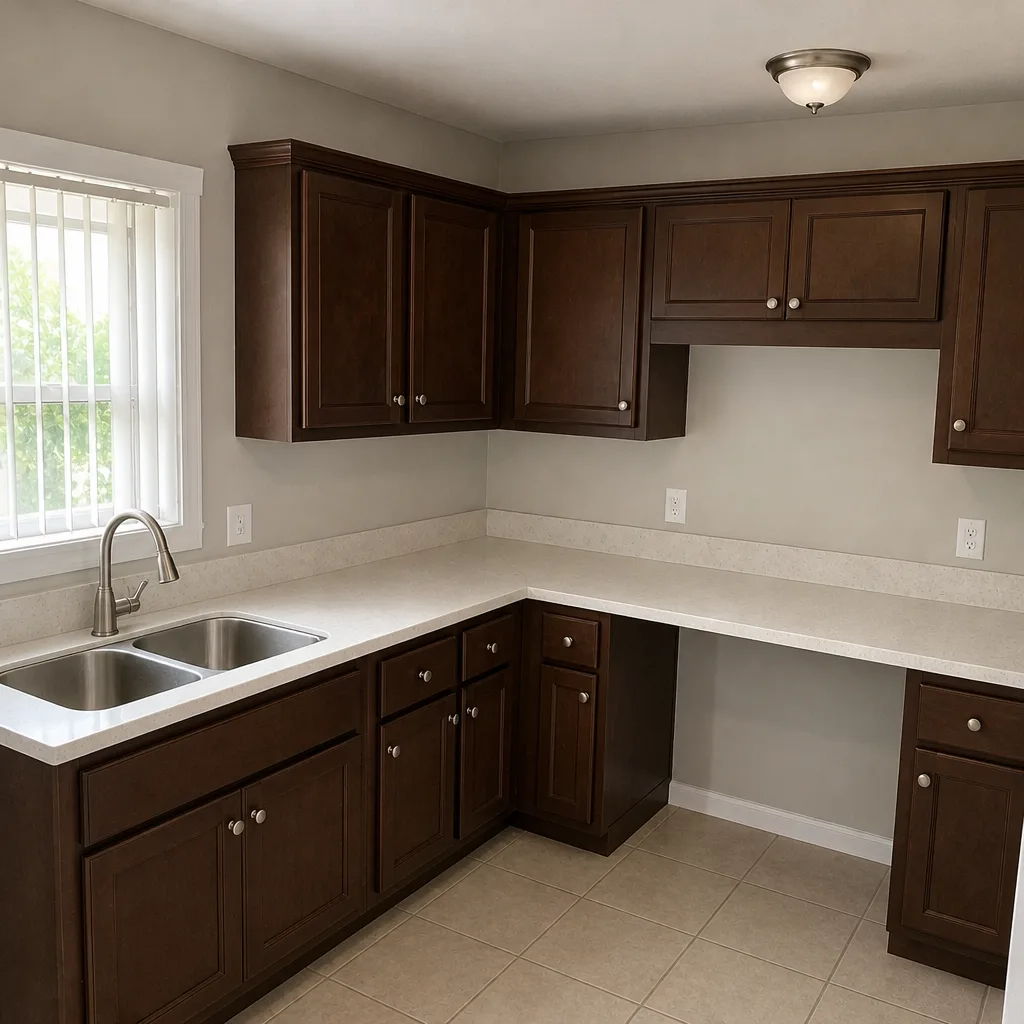
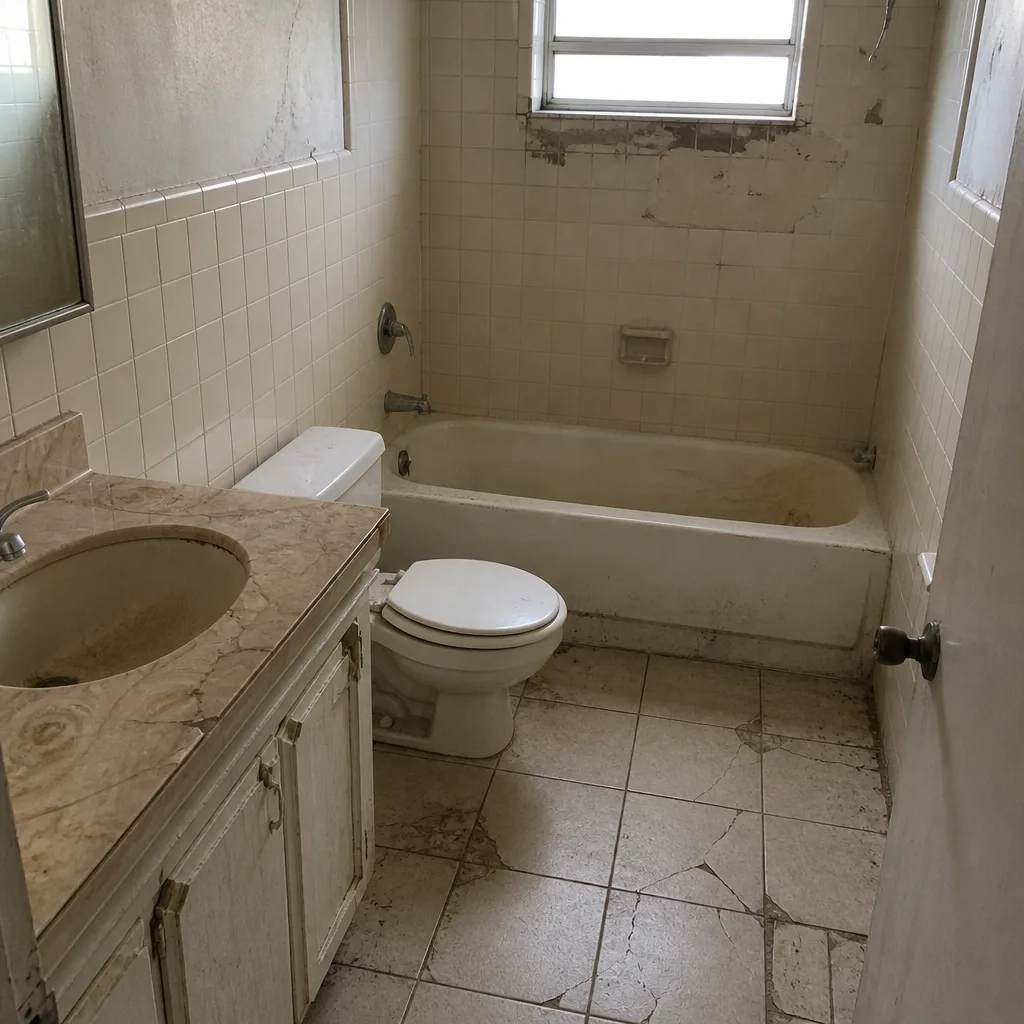
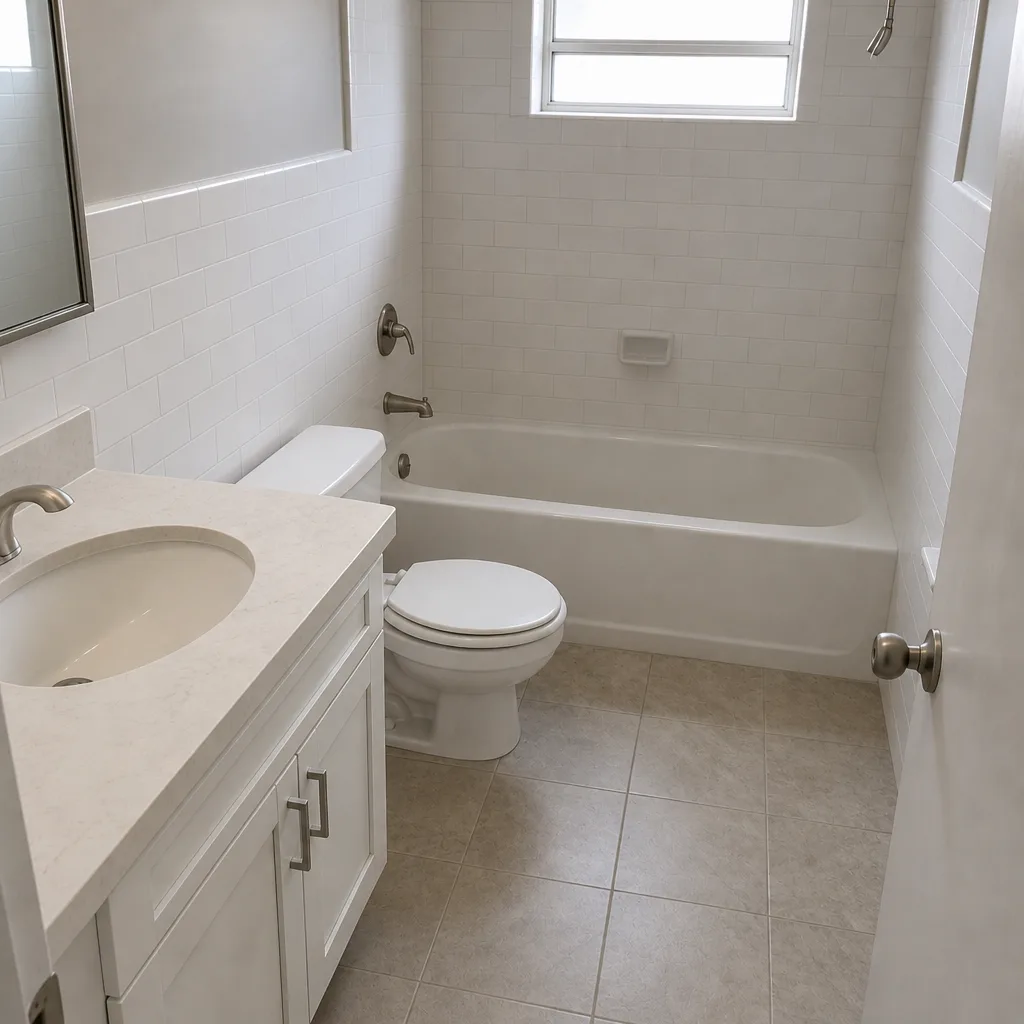
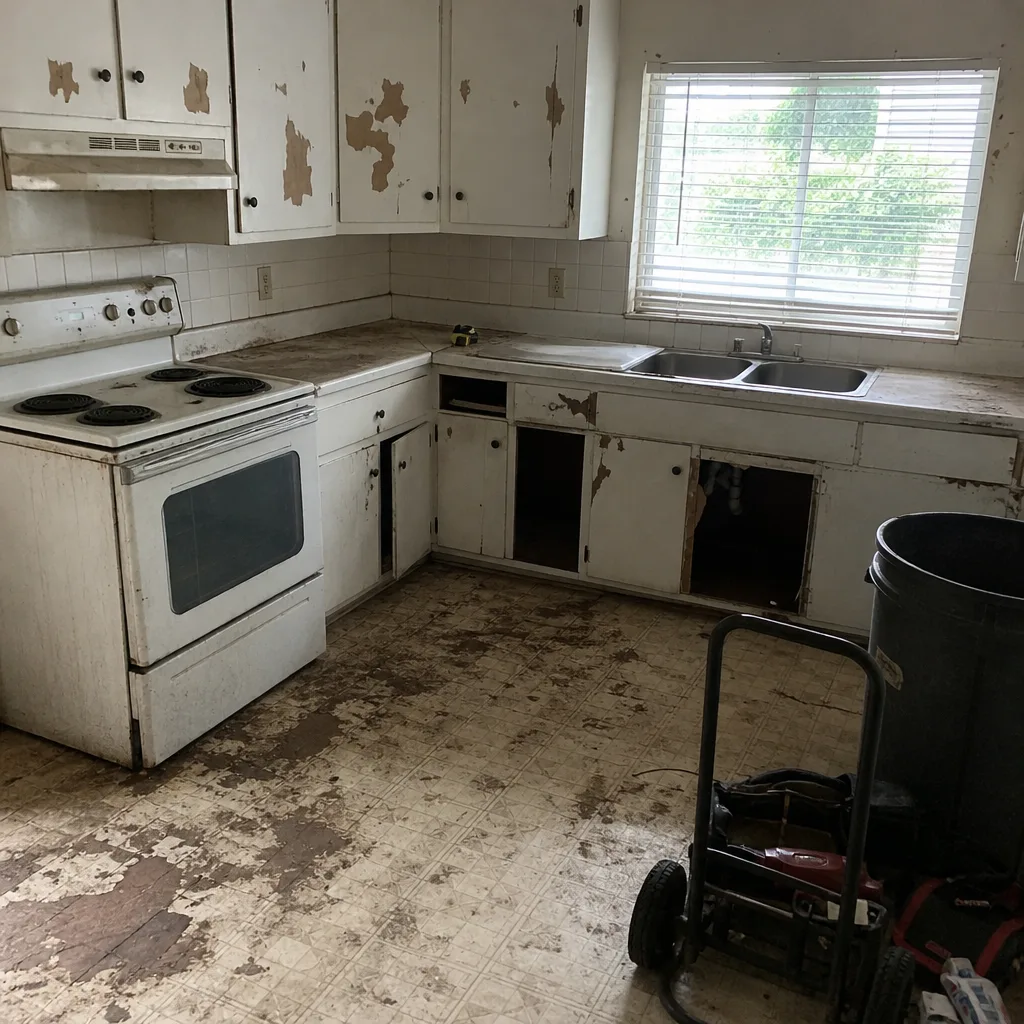
See the difference
 Before
 After
 Before
 After
 Before
 After
Frequently Asked Questions
Verbal-only pricing is the biggest red flag. A contractor who won’t put the scope, allowance, and price in writing is setting up a situation where cost overruns are your word against his. Insist on a written, line-item estimate before any deposit changes hands.
Yes, most do. In Miami-Dade County, a bathroom remodel that touches plumbing, electrical, mechanical, or structural work typically requires permits and inspection sign-off. A contractor who says permits are optional is telling you he doesn’t want the job inspected, and that’s a warning sign worth walking away from. Call (844) 797-8316 for a free estimate and we’ll walk you through the permit package for your specific job.
Ask for photo documentation and a written change order before the wall is covered. If the number seems high, get a second written opinion. Hidden damage in South Florida bathrooms is genuinely common, but it should always be documented, quoted in writing, and approved by you before the work continues. We offer a free second opinion on any written estimate. Call (844) 797-8316 to schedule one.
A full bathroom remodel typically runs four to eight weeks depending on scope, permits, and tile lead times. Small cosmetic updates can finish faster. Ask your contractor for a written sequence with milestones so you can measure progress against the schedule, and don’t accept open-ended timelines. Call (844) 797-8316 to talk through your project’s realistic timeline.
Check grout joint consistency, caulk lines at transitions, fixture seating, door and drawer swing, and the signed final inspection. A slow shower drain test and a leak check under the sink are worth doing too. Final payment is your last leverage, so don’t release it before inspection sign-off. Call (844) 797-8316 for a free estimate on your remodel.
A lien waiver is a signed statement from a subcontractor that they’ve been paid for their work on your job. Collecting partial waivers with each payment and a final waiver at the end protects you from a subcontractor filing a lien against your home even after you’ve paid the general contractor. Ask for them in writing and keep them with your project file. Call (844) 797-8316 to schedule your free estimate.
The Bottom Line
Bathroom remodel disasters almost never start on the job site. They start in the conversation before the deposit clears, in the napkin estimate, the “standard tile work” phrase, the missing permit. Read the warning signs before you sign, and you’ll avoid most of the trouble. Demand a written line-item scope with brand names and allowances. Ask about permits before the job starts, not after. Require change orders in writing. Collect lien waivers with every payment. Inspect the finished work before final payment, and confirm the final inspection sign-off. If a contractor resists any of those, walk away. And when you’re ready to compare written estimates in Miami Gardens, our neighbors on the driveway and fence side of the business hear the same advice from us every season: scope in writing, allowances in writing, change orders in writing. Call Barrett & Sons Construction Miami Gardens at (844) 797-8316 to schedule your free estimate.
Written by the team at Barrett & Sons Construction Miami Gardens.