
Last updated November 17, 2026
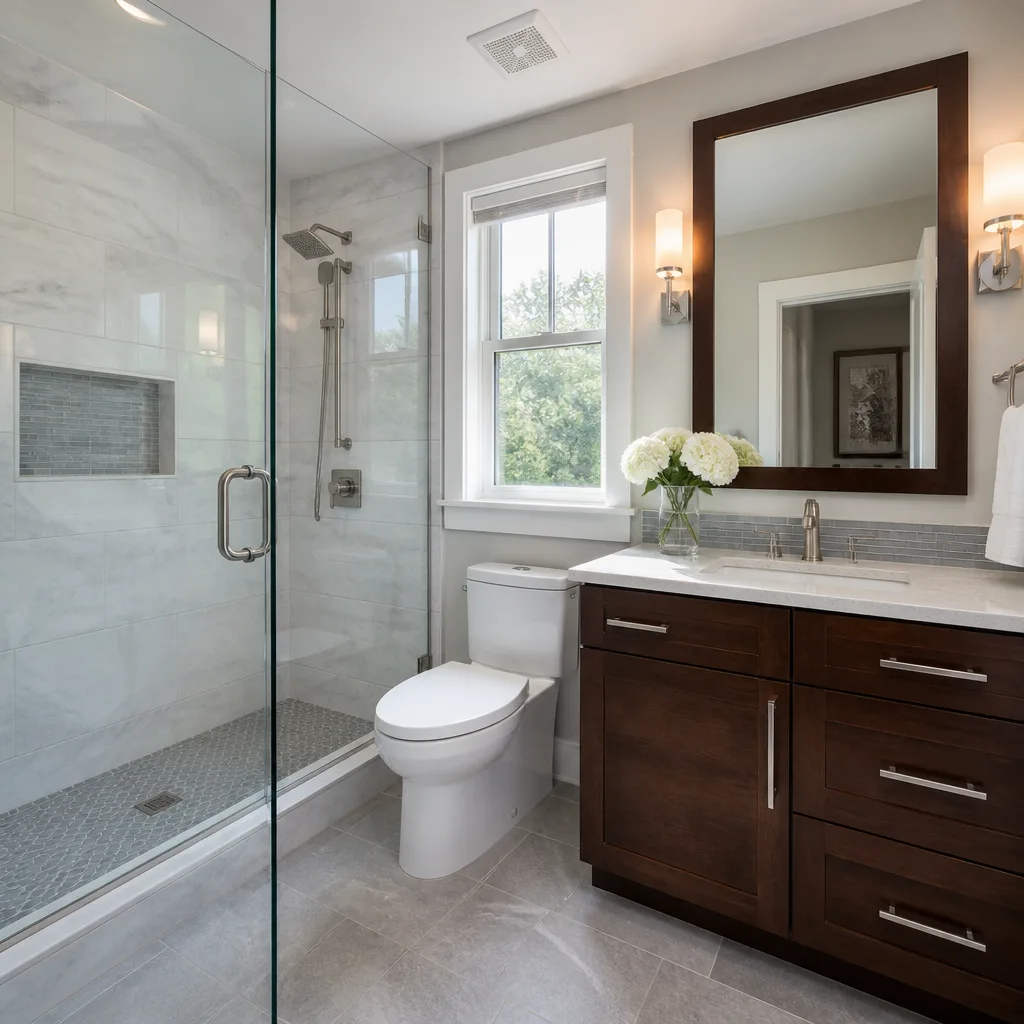 Bathroom remodeling
 Kitchen remodeling
 Home additions & ADU
 Roofing
 Windows & doors
 Driveway & pavers
 Fence
Free written scope consultation - allowances, timeline, and change-order rules on paper before a single trade is scheduled
The Complete Bathroom Remodeling Guide for Miami Gardens Homeowners
A bathroom remodel that fails in year two almost always fails at the same two points: where the shower pan meets the wall, and where the supply lines connect to the valve. Both of those are decisions made while the walls are open, long before anyone is watching the finish closely. That’s the uncomfortable truth most remodeling guides skip past. In Miami Gardens, the design choices get all the attention, but the rough-in work behind the tile is what decides whether you’re proud of the room in five years or tearing it apart. This guide walks you through permits, South Florida humidity, honest cost ranges, and the housing stock realities of neighborhoods like Carol City and Norwood, so you can plan a bathroom that holds up. We’ll start where the real work starts: behind the wall.
Quick Answer
A successful bathroom remodel in Miami Gardens hinges on three things done before tile goes up: a pulled plumbing permit with a licensed plumber, a waterproofing system built for South Florida humidity, and a written scope that separates a cosmetic refresh from a full gut. Costs run roughly $8,000-$15,000 for a cosmetic refresh, $18,000-$38,000 for a full gut in the same footprint, and $30,000-$55,000 or more once you move the drain and relocate fixtures. Get the rough-in right and the finishes last. Skip it and you’ll be back in the walls in a couple of years.
Styles & brands we work with
- Kitchen remodeling
- Bathroom remodeling
- Home additions & ADU
- Roofing
- Windows & doors
- Driveway & pavers
- Fence
Table of Contents
- Do You Need a Permit for a Bathroom Remodel in Miami Gardens?
- Why Rough-In Is the Whole Ballgame
- Material Decisions That Matter in South Florida Humidity
- Cosmetic Refresh vs. Full Gut vs. Layout Change: Honest Cost Ranges
- What Miami Gardens Housing Stock Tells You Before You Open Walls
- What a Real Tile Specification Looks Like
- Specifying a Ventilation Fan That Actually Handles Miami Humidity
- How to Choose a Remodeling Contractor in Miami Gardens
Do You Need a Permit for a Bathroom Remodel in Miami Gardens?
Yes, whenever the work goes beyond swapping a fixture. In Miami-Dade County, replacing a faucet or a toilet is generally a fixture replacement and doesn’t require a permit. The moment you move a supply line, relocate a drain, add a shower valve, or change the plumbing layout, you cross into permitted work that requires a licensed plumber. Electrical work follows the same logic. This is the line most homeowners don’t know exists until they’re standing in a half-demolished bathroom.
Why does it matter beyond the inspector’s sign-off? Because unpermitted plumbing becomes a disclosure problem when you sell. A buyer’s inspector will flag the newer tile and ask for the permit history. If there’s a shower valve you can’t document, that becomes a negotiation point, a repair bill, or a lost sale in a Miami Gardens market where buyers are already careful. The permit inspector works for you, not for the contractor. That inspection is the one independent set of eyes on the rough-in plumbing before it gets buried in cement board and tile.
On every eligible job we pull permits and get inspections signed. It’s not paperwork theater. It’s the difference between a bathroom you can hand off with confidence and one you hope nobody asks about.
Why Rough-In Is the Whole Ballgame
The rough-in stage is the part of the job nobody photographs for Instagram. It’s also where the failures live. Two points carry most of the risk.
- Where the shower pan meets the wall. Water doesn’t fail at the tile; it fails at the seam. If the waterproofing membrane doesn’t turn up the wall and lap correctly over the pan liner, capillary action pulls moisture behind the tile. In a dry climate that wall might hold for a decade. In Miami Gardens, where the outdoor dew point sits in the 70s for months, it fails in a fraction of that time.
- Where the supply lines connect to the valve. A valve set too deep, too shallow, or connected with the wrong fitting is where you find the leak after the finish is done. The shower valve body has to be set to the exact finished-wall depth the trim kit specifies. Guessing by eye is how you end up with a trim plate that doesn’t seal, or a valve that leaks from a connection hidden behind the wall.
None of this is glamorous. All of it is what we look at first when we walk into a bathroom we’re about to remodel in Miami Gardens. The finish materials get chosen in a showroom. The rough-in gets chosen in an open wall with the plumbing exposed, and that’s where the decision gets locked in.
Material Decisions That Matter in South Florida Humidity
Standard cement board, the gray stuff most tile setters use, is a common substrate for tile and it will hold tile. What it will not do is stop water from moving through the wall assembly. Cement board is not waterproof; it’s water-resistant. In a shower in South Florida, that distinction is everything, because the humidity outside never gives the wall assembly a chance to dry out the way it does in drier climates.
What we spec instead:
- A bonded waterproofing membrane system. Products like Schluter Kerdi build a continuous waterproof layer behind the tile – on the walls, over the pan, and up the wall where the pan meets. That continuous layer is what stops the shower-pan-to-wall failure at the source.
- A sheet-applied or liquid-applied membrane with the correct thickness and cure time. Liquid membranes fail when they’re rolled too thin or covered before they cure. On a Miami job, the humidity slows cure times, so the sequencing has to account for it.
- Grout choice that holds up to constant moisture. Epoxy grout outperforms cementitious grout in a shower that never fully dries, and it resists mold growth better in a humid house. Cement grout is porous and needs sealing, and in a Miami bathroom that seal needs refreshing more often than most homeowners realize.
These aren’t premium upsells for their own sake. They’re the materials that make the difference between a bathroom that looks new in year five and one that’s already been redone once. When we install premium brands like Schluter or American Standard fixtures, it’s because the name on the box is something you can look up and ask about, not a mystery label off a truck.
Cosmetic Refresh vs. Full Gut vs. Layout Change: Honest Cost Ranges
Most remodeling guides blur the lines between these three scenarios, and that’s a mistake, because the cost gap between them is enormous. Here’s how we break it down for Miami Gardens homeowners. The ranges below reflect South Florida labor rates and typical material allowances, not national averages.
- Cosmetic refresh (no plumbing moved): $8,000-$15,000. New tile over the existing substrate or a light substrate repair, new vanity, new toilet, new fixtures on existing rough-in, paint. The plumbing stays where it is, so no plumbing permit is typically required. This is the right call when the layout works and the bones are sound.
- Full gut remodel (same footprint): $18,000-$38,000. Everything out to the studs, new substrate, new waterproofing, new plumbing fixtures on the existing drain locations, new electrical, new tile throughout, new vanity and toilet. Plumbing permit required, inspection on the rough-in, then the finish work. This is the sweet spot for most bathrooms in Miami Gardens homes built in the 1970s through 1990s.
- Layout change (moving the drain): $30,000-$55,000 or more. Moving a toilet, relocating a shower, adding a fixture, or reconfiguring the room. The drain re-pipe is the cost driver, because slab or subfloor has to be opened, a new drain routed, and the whole rough-in re-inspected. Every relocated fixture also means relocating the supply and the vent, and the cost compounds quickly.
That last number is the one that surprises people. Moving a drain in a slab-on-grade house isn’t a small line item – it’s the difference between a bathroom you refresh and a bathroom you reconfigure. Get a written line-item scope before you compare bids. An allowance that isn’t on paper is a surprise waiting for a date, and the lowest bid is usually the one with the most allowances left unspoken.
What Miami Gardens Housing Stock Tells You Before You Open Walls
Much of the housing in Miami Gardens was built between the 1970s and the 1990s, and that vintage carries a predictable set of findings once you open the walls. The homes in Carol City, Norwood, and the neighborhoods off 183rd Street frequently have the original plumbing still in place. Two things we look for before anything gets closed back up:
- Galvanized supply lines. Galvanized steel corrodes from the inside out. By the time you see a rust stain or a pressure drop at the shower, the pipe has been narrowing for years. If the walls are open for a remodel, that’s the moment to evaluate the supply lines, not after the tile goes up.
- Cast-iron drain stacks. Cast iron drains last a long time, but in a humid climate the corrosion accelerates, and a cast-iron stack that’s already near the end of its service life is a problem you don’t want to discover a year after your new bathroom is finished. A camera inspection during the open-wall stage costs far less than reopening the ceiling later.
We’ve opened walls in Miami Gardens on what looked like a straightforward tile job and found a supply line that was one season from a pinhole leak. Better to find it during the rough-in than after the finish. That’s also why any plumbing change beyond the original scope gets a written change order before the work proceeds. You should know about it while the walls are open, not on the final invoice.
What a Real Tile Specification Looks Like
The cheapest tile bid in Miami Gardens is almost always cheaper because of decisions made at these steps, not because the installer is faster. When you compare bids, ask what’s included at the substrate and setting stage. Here’s what a spec should say:
- Substrate flatness tolerance. Industry standard is within 1/8 inch in 10 feet for the substrate before tile goes down. On a wall or floor that isn’t flat, large-format tile will show lippage at the joints, and lippage is a visible defect, not a cosmetic preference.
- Back-butter requirements for large-format tile. Tile larger than about 15 inches requires the back of the tile to be back-buttered (thin-set applied to the back) in addition to the troweled bed, to achieve full coverage. Skipping back-buttering creates voids behind the tile – and voids are where moisture collects in a humid climate.
- Grout joint sizing. Narrow joints look clean but leave less room for tile movement. In a South Florida bathroom where the temperature swings and the humidity is constant, the joint width and the grout type work together. Epoxy grout with the correct joint width outperforms a narrow cement grout joint that cracks.
- Movement joints at room transitions. The joint where tile meets a tub or a wall needs a flexible sealant, not rigid grout. That’s the joint that cracks first when the house moves.
A specification isn’t a sales document. It’s the checklist a good installer follows and a fast one skips. Ask for it in writing, on every bid you get.
Specifying a Ventilation Fan That Actually Handles Miami Humidity
A bathroom fan in Miami Gardens has a harder job than the same fan in a drier climate. The goal isn’t just to clear the mirror – it’s to move enough air to carry the moisture load out of the room before it condenses inside the wall assembly. Here’s how to size and spec it:
- Match the fan to the room’s cubic footage. The general rule is one CFM (cubic feet per minute) per square foot of bathroom floor area, with a minimum of 50 CFM for any bathroom. A 6×8 bathroom (48 square feet) needs at least 50 CFM; a larger bathroom with a shower and a tub needs more.
- Add capacity for the shower. A bathroom with a shower should add roughly 50 CFM to the base calculation. Miami’s humidity means the moisture load after a shower is heavier than in a dry climate, and the fan needs to clear it.
- Duct the exhaust to the outside, not the attic. A fan that dumps into the attic space just relocates the moisture problem. Verify the duct runs to an exterior vent.
- Choose a fan rated for continuous or long-runtime operation. A timer switch that runs the fan for 20-30 minutes after a shower clears the moisture that a 5-minute run leaves behind.
A good fan costs a fraction of what mold remediation costs. It’s one of the cheapest upgrades in the bathroom and one of the most consequential in a humid climate.
How to Choose a Remodeling Contractor in Miami Gardens
The contractor matters more than the tile. Here’s a practical checklist for choosing one in Miami Gardens, whether you’re off 27th Avenue or in a neighborhood near the Hard Rock:
- Verify the license. Look up the license number yourself before you sign anything. A contractor who publishes their name and license number has nothing to hide.
- Ask for the written scope and allowances. A bid without allowances is a bid that will change. Every scope, every allowance, every price change should arrive in writing before work happens.
- Ask who pulls the permit. If the answer is “you can do that,” that’s the contractor telling you they don’t want the inspection. We pull the permits and get the inspections signed on every eligible job.
- Ask who’s on the job site. You should know whose crews are coming, not a rotating cast of subcontractors you’ve never met. Background-checked crew members carry the company’s name and should be the ones doing the work.
- Ask about the change-order process. A price change should be a written change order before the work proceeds, not a line item on the final invoice.
- Ask about the warranty. A written warranty on the contract, not a verbal promise, is what you have if something goes wrong.
We’re owner-operated, and our crews carry our name. That’s the model you should expect from anyone remodeling a bathroom in Miami Gardens.
Common Mistakes to Avoid
- Choosing the cheapest tile bid without checking the spec. The low bid usually reflects a skipped substrate prep or a thinner membrane. You’ll pay for either one at the five-year mark.
- Skipping the plumbing permit to save a few hundred dollars. That savings becomes a disclosure problem when you sell, and nobody wants to buy a house with undocumented plumbing hidden in the walls.
- Setting the shower valve by eye. The valve body has to match the finished-wall depth of the trim kit. A valve set wrong is a leak waiting for the tile to come off.
- Using cement board as if it were waterproof. It’s water-resistant, not waterproof. In a South Florida shower, the wall assembly never dries out between humid weeks, and that’s where moisture collects.
- Venting the bathroom fan into the attic. You’ve moved the moisture, not removed it. It condenses in the attic and causes problems you’ll discover later.
- Leaving allowances unwritten. A bid with no written allowances is a bid with room to grow. Every price change should arrive as a written change order before the work proceeds.
- Ignoring the galvanized supply lines in a 1970s Miami Gardens home. If you’re opening the walls anyway, that’s the cheapest moment to evaluate the plumbing, not the most expensive one two years later.
See the difference
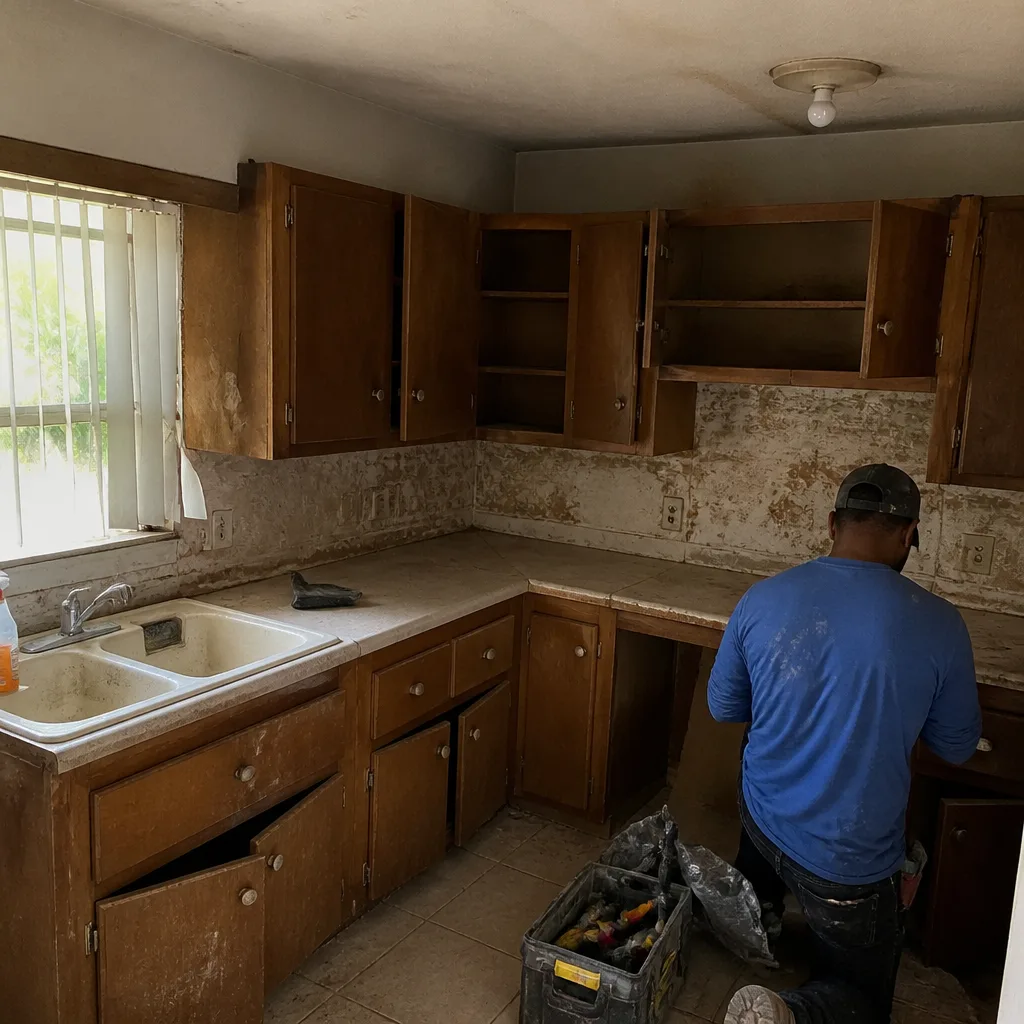 Before
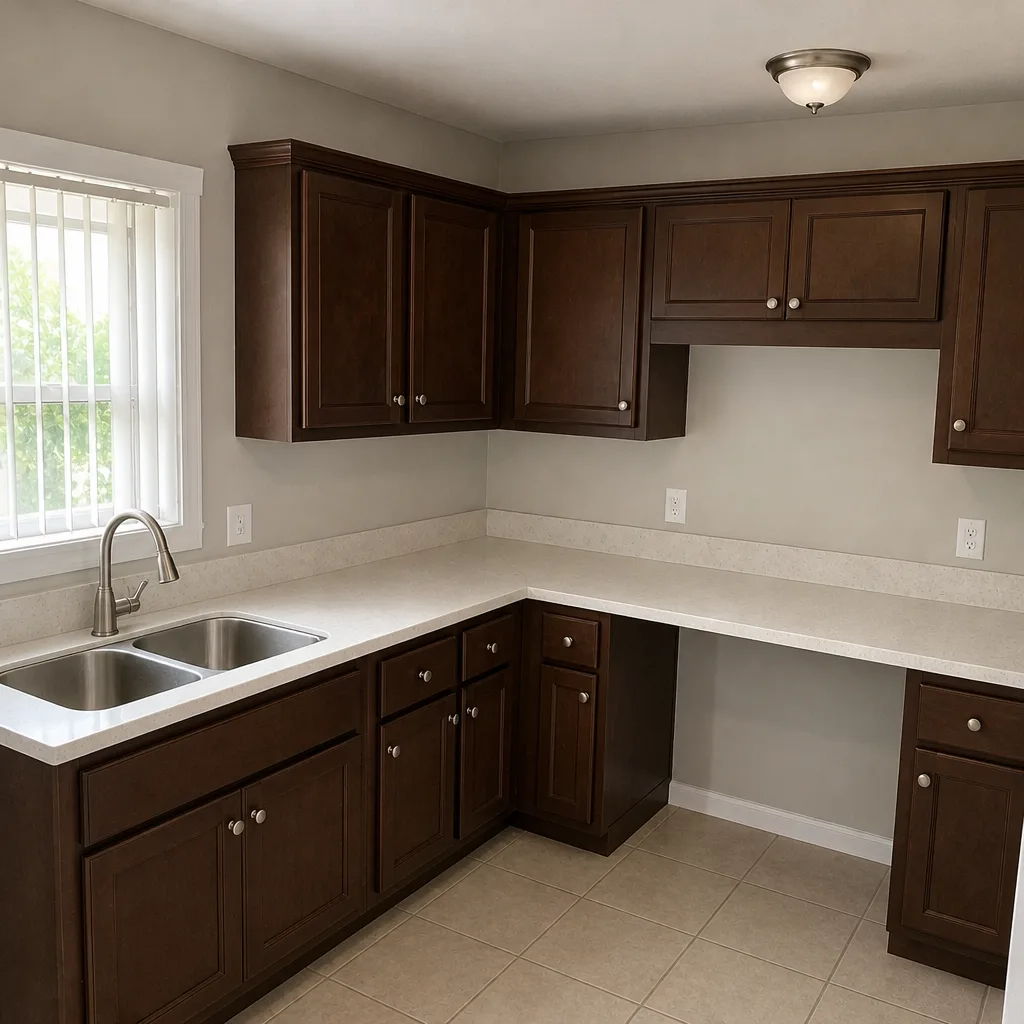 After
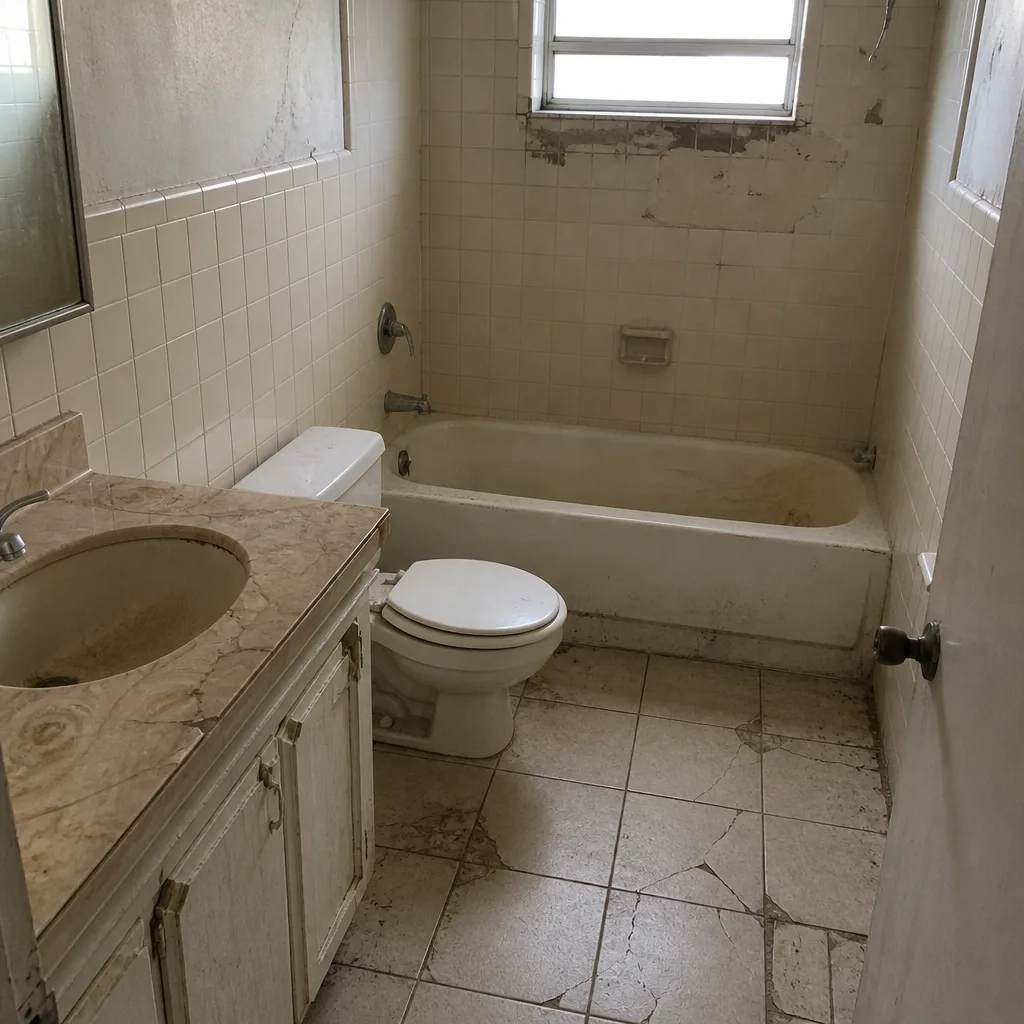 Before
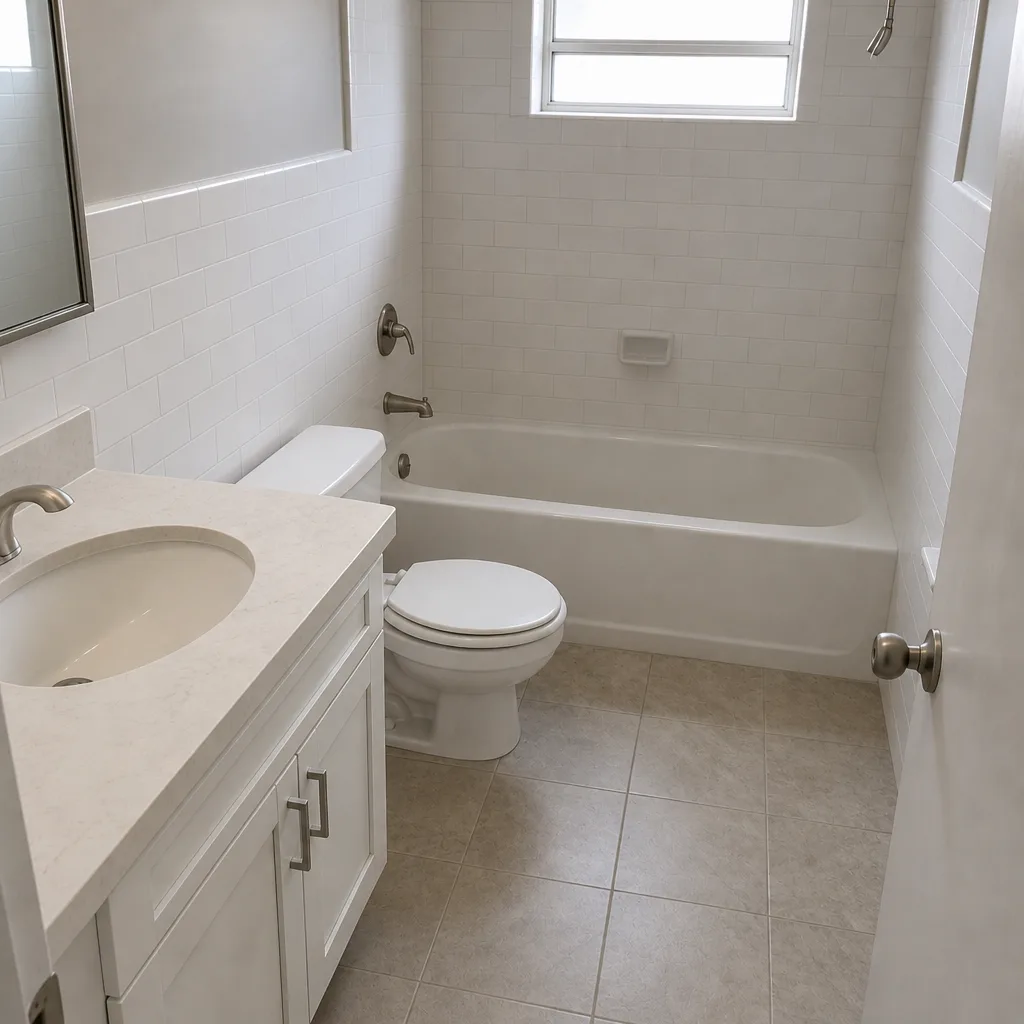 After
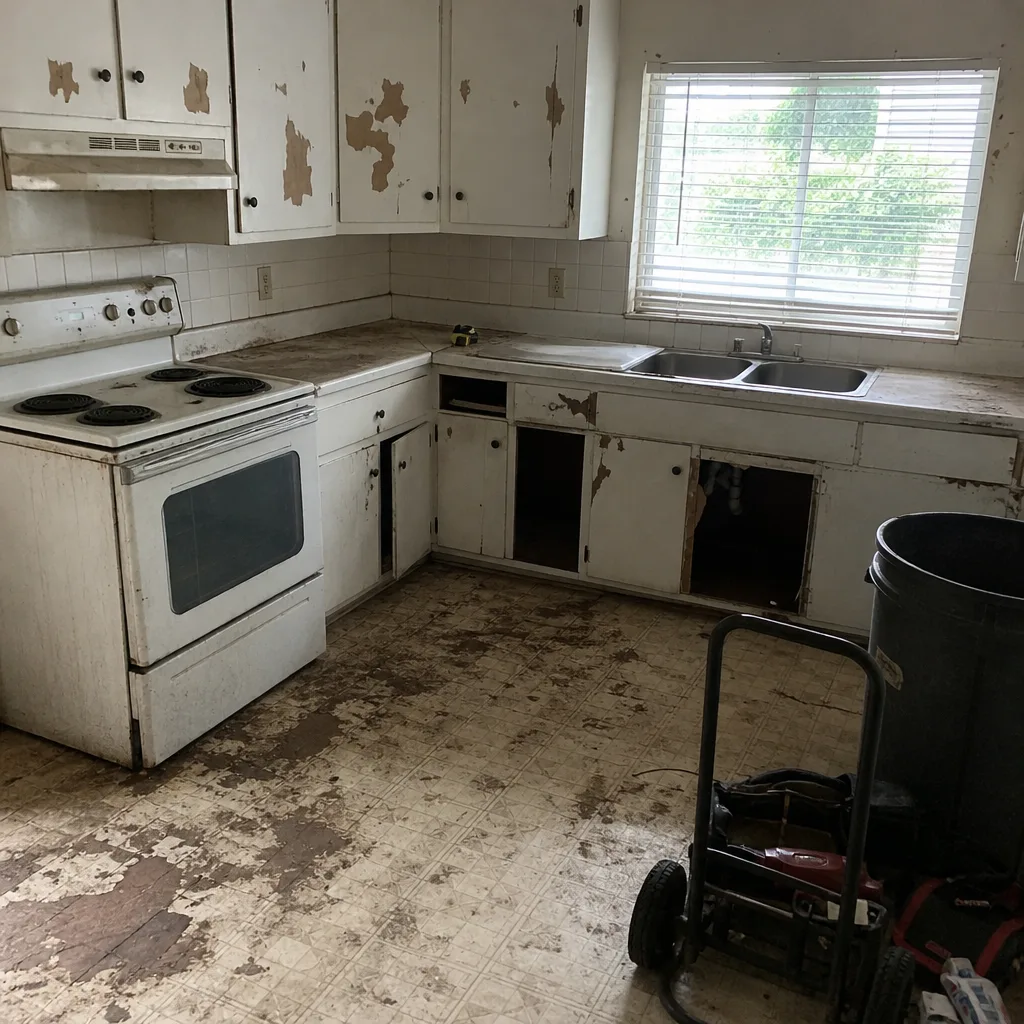 Before
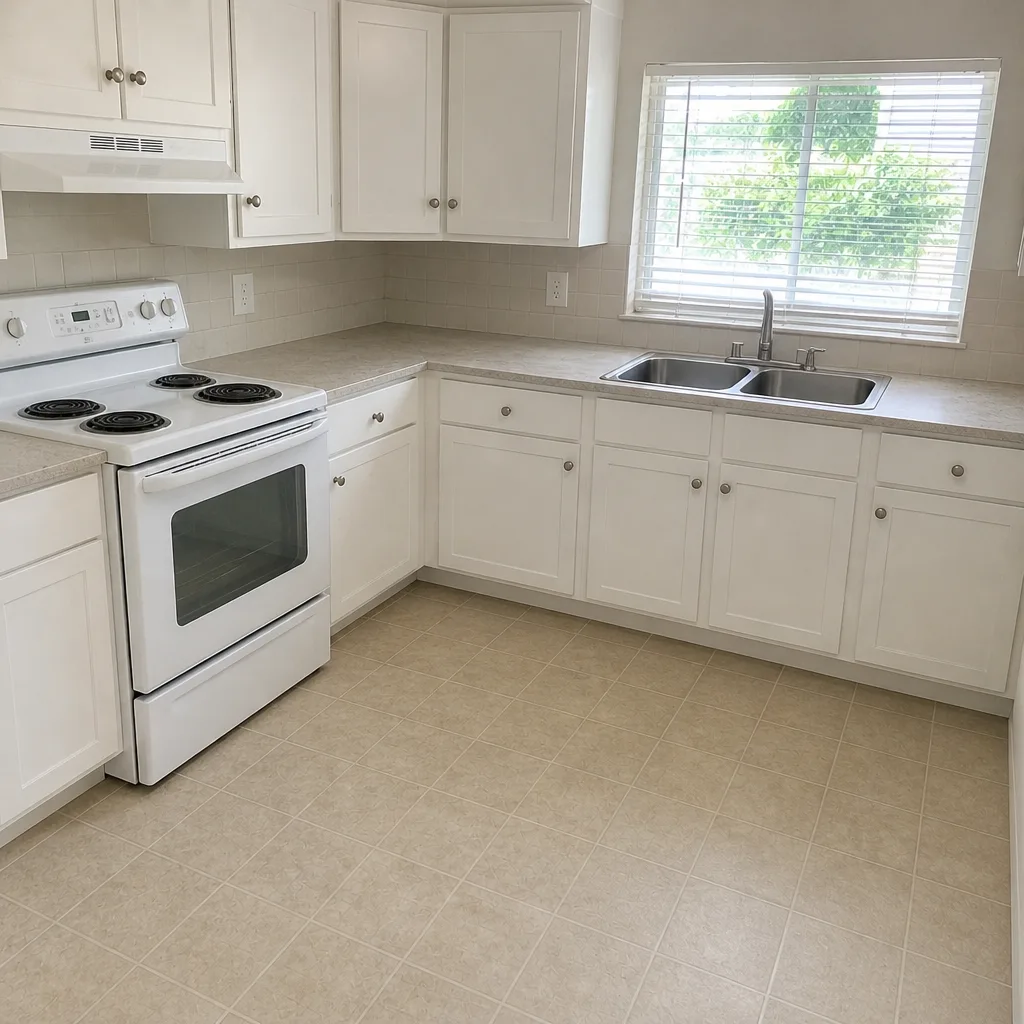 After
When to Call a Professional
Some jobs are DIY-sized. Replacing a faucet, swapping a toilet, or resealing grout are within reach for a careful homeowner. But the moment the work touches plumbing behind the wall, a shower valve, electrical, or a permit, it’s a professional job. Moving a drain in a slab, building a waterproofed shower pan, and setting a large-format tile wall with the correct back-buttering and joint widths are all steps where a mistake is expensive and often invisible until it fails. In our experience, the bathroom that gets in trouble is the one where the homeowner did the rough-in to save money and the finish work looks great for a year. This is where Barrett & Sons Construction Miami Gardens offers free estimates in Miami Gardens – call (844) 797-8316 to schedule yours.
Frequently Asked Questions
A cosmetic refresh in Miami Gardens runs about $8,000-$15,000, a full gut in the same footprint runs $18,000-$38,000, and a layout change that moves the drain runs $30,000-$55,000 or more. The gap is driven by plumbing and finish-scope decisions, not by the tile. Call (844) 797-8316 for an exact quote – estimates are free.
Yes, whenever the work goes beyond swapping a fixture or faucet. Miami-Dade requires a licensed plumber and a permit for any rough-in plumbing change, and electrical work follows the same rule. The permit protects you at resale and gets an independent inspection on the rough-in before the tile goes up. Call (844) 797-8316 and we’ll walk you through what your specific job requires.
Most bathroom remodels run four to eight weeks depending on scope, permit timing, and material lead times. A cosmetic refresh can move faster; a layout change that opens the slab takes longer. The permit and inspection schedule is part of that timeline. Call (844) 797-8316 for a written timeline on your job.
Not without a written change order, and only when the scope changes. If we open the wall and find a galvanized supply line that needs replacing, you’ll get a written change order before the work proceeds. You won’t get a surprise invoice at the end. Call (844) 797-8316 for a written line-item estimate.
We use a bonded waterproofing membrane system, typically Schluter Kerdi or an equivalent, on every shower we build. Standard cement board alone isn’t waterproof, and in South Florida humidity the wall assembly never dries out the way it does in drier climates. Call (844) 797-8316 to talk through the waterproofing spec for your bathroom.
A cosmetic refresh keeps the existing plumbing layout and replaces tile, fixtures, and the vanity; a full gut takes the room down to the studs and rebuilds the substrate, waterproofing, and plumbing on the existing drain locations. The full gut requires a plumbing permit and inspection; the cosmetic refresh usually doesn’t. Call (844) 797-8316 for an exact quote on either – estimates are free.
The Bottom Line
Bathroom remodeling in Miami Gardens is a plumbing-first project. The choices that decide whether you’re proud of the room in year five or reopening the walls to fix it are made in the rough-in stage, behind the tile, before anything shows. Get the permit pulled, get the waterproofing built for South Florida humidity, get the valve set to the finished-wall depth, and get the scope and allowances in writing before a single piece of tile goes up. The finish is what you see. The rough-in is what decides whether the finish lasts.
If you’re planning a remodel and want a second set of eyes before you commit, call (844) 797-8316 for a free estimate. While you’re planning, take a look at Barrett & Sons Construction Miami Gardens home and explore the rest of what we do for Miami Gardens homeowners, including Driveway & Pavers in Miami Gardens, Fence Installation in Miami Gardens, and Home Additions & ADU in Miami Gardens. Ask anyone on your street, or look up the license number yourself.
Written by the team at Barrett & Sons Construction Miami Gardens.