
Last updated November 17, 2026
 Home additions & ADU
 Kitchen remodeling
 Bathroom remodeling
 Roofing
 Windows & doors
 Driveway & pavers
 Fence
Free written scope consultation - allowances, timeline, and change-order rules on paper before a single trade is scheduled
Construction Warning Signs: A Miami Gardens Homeowner’s Reference Guide
A crack that looks terrifying to a homeowner in one spot on a Miami Gardens block wall can be meaningless in another. That’s the part most warning-sign guides skip. Location matters more than width. We’ve walked jobs in Miami Gardens where the homeowner was ready to pack up over a hairline crack at a corner, and we’ve opened walls where a “small” crack in the middle of a run turned out to be moving water. This guide teaches you to read the warning signs the way a contractor does: by orientation, by pattern, by what’s happening around the crack, and by what South Florida’s heat and humidity do to CBS block, poured concrete, and stucco. You’ll learn which signs you can watch, which need a call this week, and which need an engineer.
Quick Answer
Most Miami Gardens construction warning signs come down to three questions: is the crack new or old, is it moving, and is water involved. Stair-step cracks in CBS block, efflorescence powder that keeps returning, spalling concrete at slab edges, and roof shingles lifting or granulating all deserve a look. Stick to watching, photographing with a dated ruler, and calling a licensed contractor when the pattern is changing or water is getting in.
Styles & brands we work with
- Kitchen remodeling
- Bathroom remodeling
- Home additions & ADU
- Roofing
- Windows & doors
- Driveway & pavers
- Fence
Table of Contents
- How to Read Cracks: Orientation, Location, and Pattern
- South Florida Warning Signs Most Guides Miss
- What a Problem Roof Looks Like From the Ground
- Drainage Red Flags That Predict Foundation Trouble
- Cosmetic Fix vs. Structural Issue: What You Can Handle and What You Can’t
- Seasonal Warning Signs in Miami Gardens
- The 10-Minute Walkthrough: A Step-by-Step Inspection
- What to Photograph and Record Before You Call Anyone
How to Read Cracks: Orientation, Location, and Pattern
The crack’s location is the diagnostic. Not the width alone. A 1/8-inch crack at the outside corner of a CBS block wall is a different animal than a 1/8-inch crack mid-run, and both are different from a stair-step that runs from a window corner. Here’s how to tell them apart.
Stair-step cracks in CBS block
Miami Gardens was built on concrete block, and block cracks like mortar cracks. A stair-step pattern that walks up the joints is what you’re looking for. If that stair-step sits at a corner where two walls meet, it usually points to footing settlement or a soil issue. If it runs out from above or below a lintel (the beam over a window or garage door), it often points to load transfer. If it zigzags through the middle of a wall run with no opening nearby, that’s the one worth a closer look from a professional, because it usually means something is moving under the slab or the wall is reacting to a shifting foundation.
Cracks in poured concrete
Poured concrete (patios, driveways, slabs) cracks from shrinkage and thermal movement. Miami Gardens heat pushes 90 degrees most of the summer, and a slab that wasn’t jointed correctly will crack. A single hairline crack through a driveway or patio slab with no offset (one side level with the other) is usually cosmetic. A crack that develops an offset – one side sitting noticeably higher – means something under it is washing away.
Cracks in stucco
Stucco cracks are common and often harmless. Spiderweb cracking (fine, tight, all-over) is a curing issue. Long, straight cracks that line up with the studs behind them are usually substrate movement and get patched. What you don’t want to see is a stucco crack that lines up with a block crack, or one that widens then narrows seasonally. A crack that grows and shrinks with the rain cycle is telling you water is getting behind it and the wall is soaking up moisture underneath.
If you’re seeing these patterns on a home you’re thinking about expanding or adding to, the fix starts with a written scope. Home Additions & ADU in Miami Gardens is where we go deep on how structural repair gets folded into a larger project.
South Florida Warning Signs Most Guides Miss
Most construction warning-sign lists were written for a four-season climate where frost cracks brick and a frozen foundation heaves. None of that lives here. Miami Gardens symptoms are heat, humidity, rain, and salt air, and they show up in three specific ways.
Efflorescence on block
That white powder blooming on the outside of a block wall is efflorescence – water-soluble salts pushed to the surface as moisture moves through the block. A little, once, after a rain, is normal. What’s not normal is efflorescence that keeps coming back or appears in a fresh patch every month. That means water is traveling through the block continuously, and it’s usually coming from a roof leak, a failed stucco joint, or an irrigation line spraying the wall. If you scrub it off and it’s back within a few weeks, call someone.
Spalling on slab edges
Spalling is where the top layer of concrete pops off. In Miami Gardens we see it most at driveway aprons, patio edges, and the exposed slab edge under a carport or porch. The cause is usually a steel reinforcing bar sitting too close to the surface, rusting, expanding, and blowing off the concrete cover. A 1-inch spall that’s stable is a cosmetic patch or a decorative overlay. A spall that exposes rebar or keeps growing is structural and needs an evaluation.
Delaminating stucco
Put your palm flat on the stucco and tap. It should sound tight and solid. If it sounds hollow or dry, the stucco has separated from the block (delaminated). In Miami Gardens, this is very often a window or door perimeter issue where the flashing wasn’t installed correctly years ago and water has been quietly working behind the stucco ever since. Hollow stucco, a soft spot next to a window, or a chunk that fell off after a rainstorm are all signals to call someone. It’s cheaper to patch a small delamination than to repair a wall cavity that’s been wet for a season.
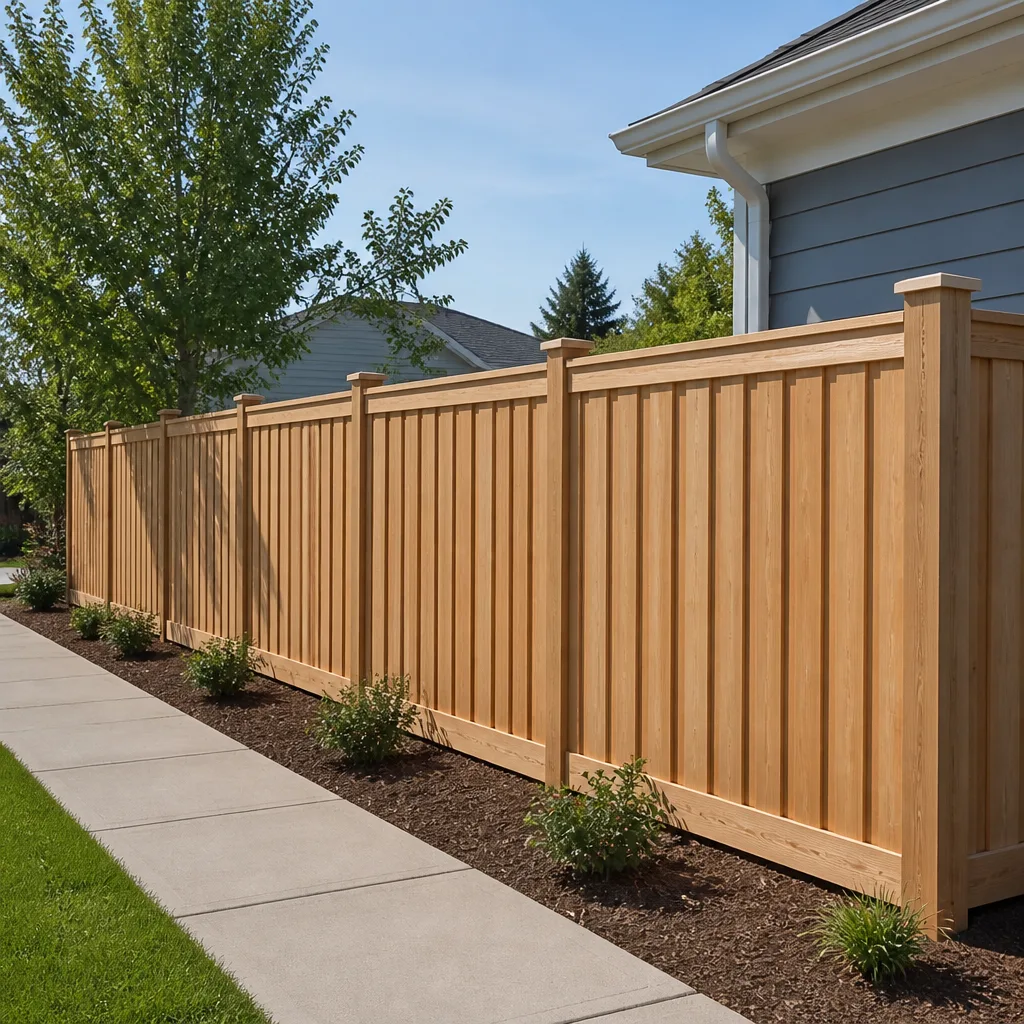
If you’re seeing these signs at the front, walk the whole perimeter. Fence lines and property lines give you the best unobstructed view of block walls. Fence Installation in Miami Gardens has more on what a healthy perimeter wall should look like.
What a Problem Roof Looks Like From the Ground
We mean this literally. You should not be walking your own residential roof to check it, and we’re not going to give you a ladder-climbing checklist. A fall from a Miami Gardens roof is a serious injury, and the tile, shingle, and metal surfaces here can look intact and give way under a sneaker. Everything below is meant to be read from the driveway or from inside the house.
What to look for from the driveway
- Granule loss in the gutter and at downspouts. Small dark granules at the base of a downspout mean the shingle surface is wearing away. GAF and CertainTeed shingles here in Miami Gardens are rated for Florida sun, but they still wear – and once the granules go, the asphalt underneath bakes fast.
- Lifted or lifted-back shingles. From the ground, look for a roofline that has ripples or sections that don’t sit flat. Wind events and heat cycling both cause this.
- Tile that’s slipped or cracked. On a tile roof, a slipped tile is a visible gap. That gap is a direct path for water to reach the underlayment.
- Dark or discolored streaks. Long dark streaks running down a shingle roof are usually algae. Not a leak on its own – but they hold moisture and shorten the roof’s life.
- Sagging along the ridge. A ridge that sags visibly means sheathing or framing has given up somewhere.
What to look for from inside
- Water stains on the ceiling, especially around ceiling fans and light fixtures
- Brown rings that appear after a heavy rain and fade later
- Stains that are new every storm
- A musty smell in a room you didn’t notice last year
- Bubbling or peeling paint on the ceiling near exterior walls
- Sagging drywall or bubbling drywall joints
One interior stain, once, after a named storm is a conversation. An interior stain that shows up on every rain is a call-this-week item. Roof problems here run on a delay. A small leak in April is a ceiling in September. Our roofing pages walk through what a proper inspection covers and why. If you’re planning a full roofline refresh, Barrett & Sons Construction Miami Gardens home is the place to start.
Drainage Red Flags That Predict Foundation Trouble
This is the part of the guide most home inspectors won’t put in writing, because the damage isn’t visible yet. Water is the number one cause of foundation movement in Miami Gardens, and the signs show up in drainage months before they show up in the house.
The signs to watch
- Standing water for more than a few hours after rain. South Florida soil is sandy and drains fast. If a puddle is still there a day later, the grade is wrong, the swale is blocked, or the ground is compacted.
- Water running toward the house. Every house should slope away from the slab. If you can stand in the yard after rain and see water moving back toward the wall, that water is running under the slab too.
- Mulch beds that wash out. If you’re replacing pine bark mulch in the same spot two or three times a year, water is funneling through that bed and soaking the soil next to the foundation.
- Settled sidewalk or patio sections. A slab that has dropped a half-inch or more is usually a sign of soil movement underneath.
- Downspouts that dump at the wall. A downspout terminating against the block wall sends hundreds of gallons into the same spot over a season.
- Gutter overflow at one corner. An overflowing gutter at one corner usually means a clog, but it also means water is running down the wall and pooling at that corner of the foundation.
- Cracked or missing swale markings. In a lot of Miami Gardens neighborhoods, the drainage swale between homes is the only thing keeping water moving during a heavy summer storm. If it’s been filled in, re-graded, or built over, water finds a new route.
The fix for most of this is regrading and a proper paver or hardscape base that moves water where it needs to go. If your driveway is part of the drainage problem, Driveway & Pavers in Miami Gardens covers how a base is built to shed water instead of trapping it. A well-set paver driveway with a correct slope is one of the cheapest foundation protections you can put on a home in Miami Gardens.
Why this matters 12 – 18 months out
Foundation movement follows water. Water softens the soil on one side. The slab settles on that side. Twelve to eighteen months later, a hairline crack shows up inside the house. If you catch the drainage now, you can often prevent that crack. If you catch the crack first, you’re fixing both.
Cosmetic Fix vs. Structural Issue: What You Can Handle and What You Can’t
The question every Miami Gardens homeowner asks: which of these signs can I live with, and which is a call?
Cosmetic (watch and maintain)
- Hairline cracks (thinner than a dime) in poured concrete slabs with no offset
- Spiderweb cracking in stucco
- A single shingle lifting after a storm that you can see lying flat again the next day
- Seasonal exterior paint chalking and fading
- Minor wood fence posts leaning after a wet season (fence posts, not foundation)
Watch-and-record (call if it changes)
- Stair-step block cracks with no wet spot and no width change
- Efflorescence that appears once and stays clean after a wash
- One isolated interior ceiling stain that doesn’t return after a heavy rain
- A lone crack in a driveway that hasn’t widened in 6 months
Structural (call a licensed contractor)
- Any crack that has widened since you last looked at it
- Stair-step cracks that run from a window or door corner and continue
- Cracks that show up on both sides of a wall, in line
- Doors that no longer latch, or that stick suddenly in one season
- Floors that slope or feel springy in one spot
- Spalling that has exposed rebar or a hollow sound across a wide area
- Any stucco delamination on an exterior wall
- Any roof sagging, ridge depression, or interior ceiling stain that returns
When a licensed contractor looks at a crack that has movement, they’ll often recommend an engineer. That’s not upselling. In Florida, structural repair beyond cosmetic patching is a specialty, and an engineer’s letter is what allows a proper repair to be designed and permitted correctly. Permits matter on this work, and inspections can and should accompany any structural repair. A contractor who tells you a structural crack is “just cosmetic, we’ll mud over it” without asking to look at the interior side is a warning sign of its own.
Seasonal Warning Signs in Miami Gardens
Miami Gardens warning signs cluster around the calendar. Knowing when to look saves you from discovering a problem after it’s had months to grow.
Late spring and early summer (before the heavy rain)
This is the season to look up. Roof edges. Ceiling corners. Gutter flow away from the wall. Every sign of water damage you can catch before the summer rains has a cheaper repair than the one you’ll face in October. This is also the time to check the drainage – grade, swale, downspout outlets – before the first major rain event tests them.
Mid-to-late summer (rainy season)
Rainy season is where the warning signs show up. Efflorescence blooms. New interior stains appear. Mulch washes out. This is the season for photographing. Take dated photos of every new sign you see. The single most useful thing you can do for a contractor, a roofer, or an engineer is bring a dated photo of what the wall looked like six weeks ago and what it looks like now.
Fall and winter (dry season)
Dry season is the season for verification. A crack that grew in the summer stops growing by November. That’s the moment to measure it. Mark both ends of a crack with a pencil and measure the widest point. Write the date next to the mark. If the crack is the same width next year, that’s a stable cosmetic issue. If it’s wider, that’s your answer.
The 10-Minute Walkthrough: A Step-by-Step Inspection
Here’s a walkthrough you can do in ten minutes once a quarter. It’s not a substitute for a professional inspection – it’s a way to know when to call one.
- Start at the front corner and walk the perimeter. Walk the whole exterior of the house. Note every crack, every discoloration, every hollow-sounding spot in the stucco.
- Look up at the roofline from the driveway. Flat, straight, no ripples, no sag, shingles lying flat, tile in place. Note anything that doesn’t look right.
- Walk the interior ceiling corners of every room you can. Use a flashlight even in daylight. Water stains are easy to miss.
- Open and close every exterior door and window. Sticking, catching, or a gap that wasn’t there last year is a movement signal. Don’t force anything; just note what’s changed.
- Check every downspout outlet. Water should be moving away from the wall, not against it.
- Walk the yard after a heavy rain. Note where water sits, where it flows, and where mulch has washed out.
- Open the garage door and look at the block wall above it. Any stair-step crack at the corner of a garage opening gets photographed with a dated ruler.
- Write down what you found and date it. One page. Dated photos of the four worst things you found. Keep it in a folder.
- Compare to your last list. New cracks, cracks that widened, stains that returned, spots that are wetter than last time.
- If two or more items are on the “structural” list from this guide, call a professional. One item is a conversation. Two is a call.
What to Photograph and Record Before You Call Anyone
You’ll save money on any estimate if you walk in prepared. Here’s what a contractor wants to see, and what will save you a truck roll and an hour of someone’s time.
- A dated photo of every crack with a ruler or a coin against it for scale. Name the photo by the room and the date.
- Photos of the interior side of the same wall where the exterior crack is. A crack that’s on both sides is a different conversation than a crack that’s outside only.
- The age of the roof and any known repairs from the last 10 years. If you don’t know, say so.
- Any prior inspection or engineer’s report, even an old one. It gives a baseline.
- What happens after heavy rain – where water goes, where it sits, and if anything gets wet inside.
- Any interior changes – doors that stopped closing, a floor that started squeaking, a stain that appeared on an anniversary of a storm.
Bring that folder to any estimate you get, from us or anyone else. A contractor who looks at the photos, asks to see the interior, and puts the observation in writing is doing the job right.
Common Mistakes to Avoid
- Panicking over a hairline crack. A thin crack in a slab with no offset is usually cosmetic. Watch it for a season before you call anyone. Panicking over one small crack leads to overpaying for work you didn’t need.
- Ignoring efflorescence because “it’s just powder.” If it keeps coming back after a wash, water is moving through the block. Treat it as a signal, not a stain.
- Climbing on the roof to check. Residential roofs in Miami Gardens are genuinely dangerous to walk on. You’ll see what you need to see from the driveway and from inside. This is the mistake that turns a small repair into a hospital visit.
- Letting a contractor patch a structural crack without an engineer’s input. If a crack is moving and a contractor says “we’ll just fill it,” ask for a second opinion. A structural repair is not the same job as a cosmetic patch.
- Skipping the permit on a structural repair. In Miami Gardens, structural repair work usually needs a permit and an inspection. A contractor who says permits are optional on structural work is telling you what to expect on the rest of the job.
- Filling in the drainage swale for a bigger yard. We see this often. Every neighbor downstream of that fill ends up with water. It also puts your own foundation at risk the next summer.
- Not documenting. A dated photo of a crack taken today is worth more than a description of it next year. Insurance claims and contractor conversations both go better with a photo.
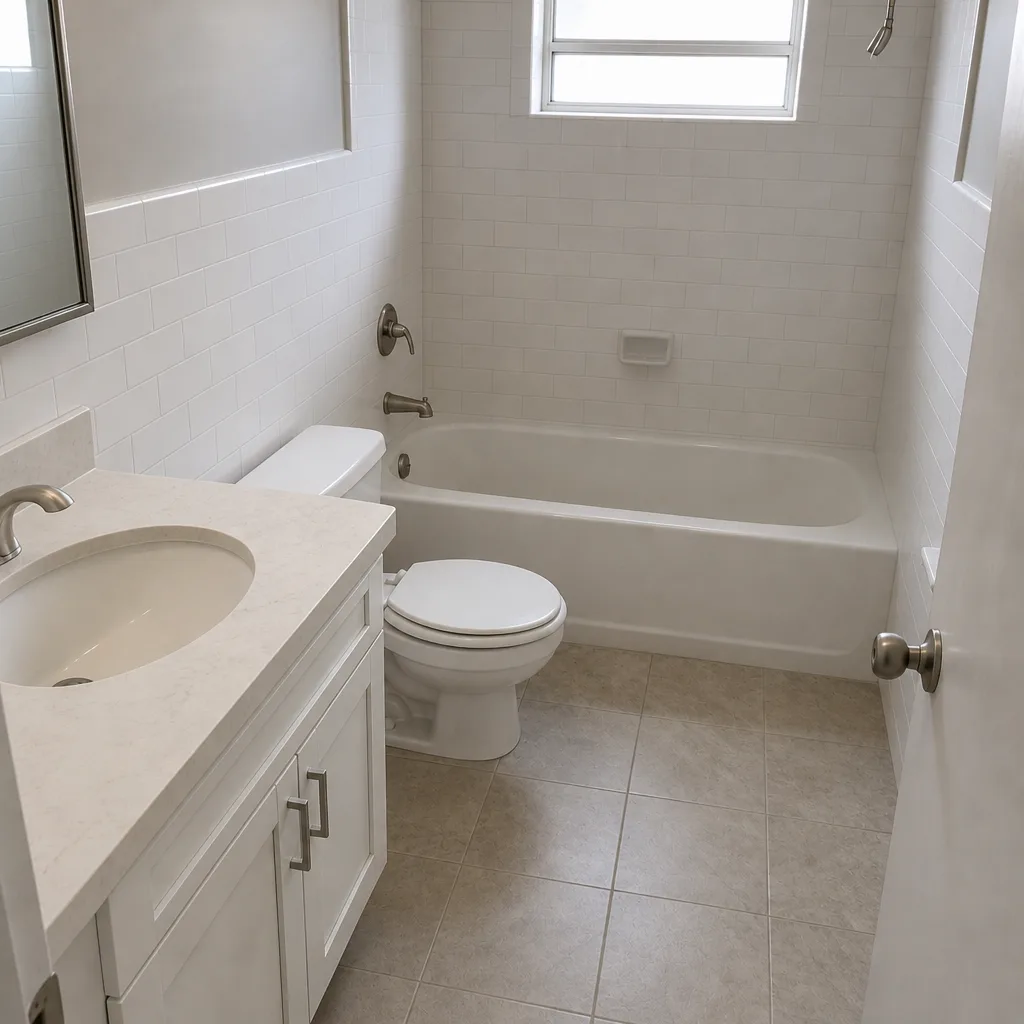
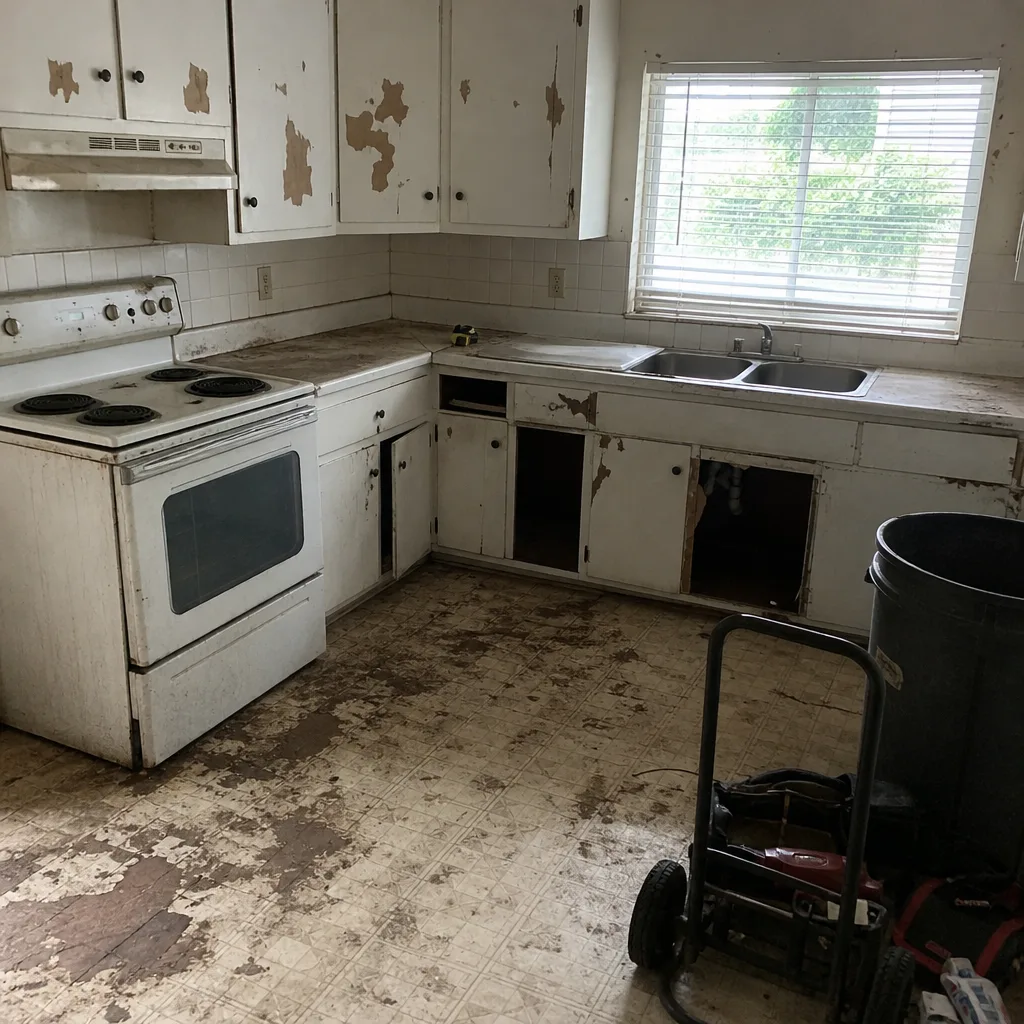
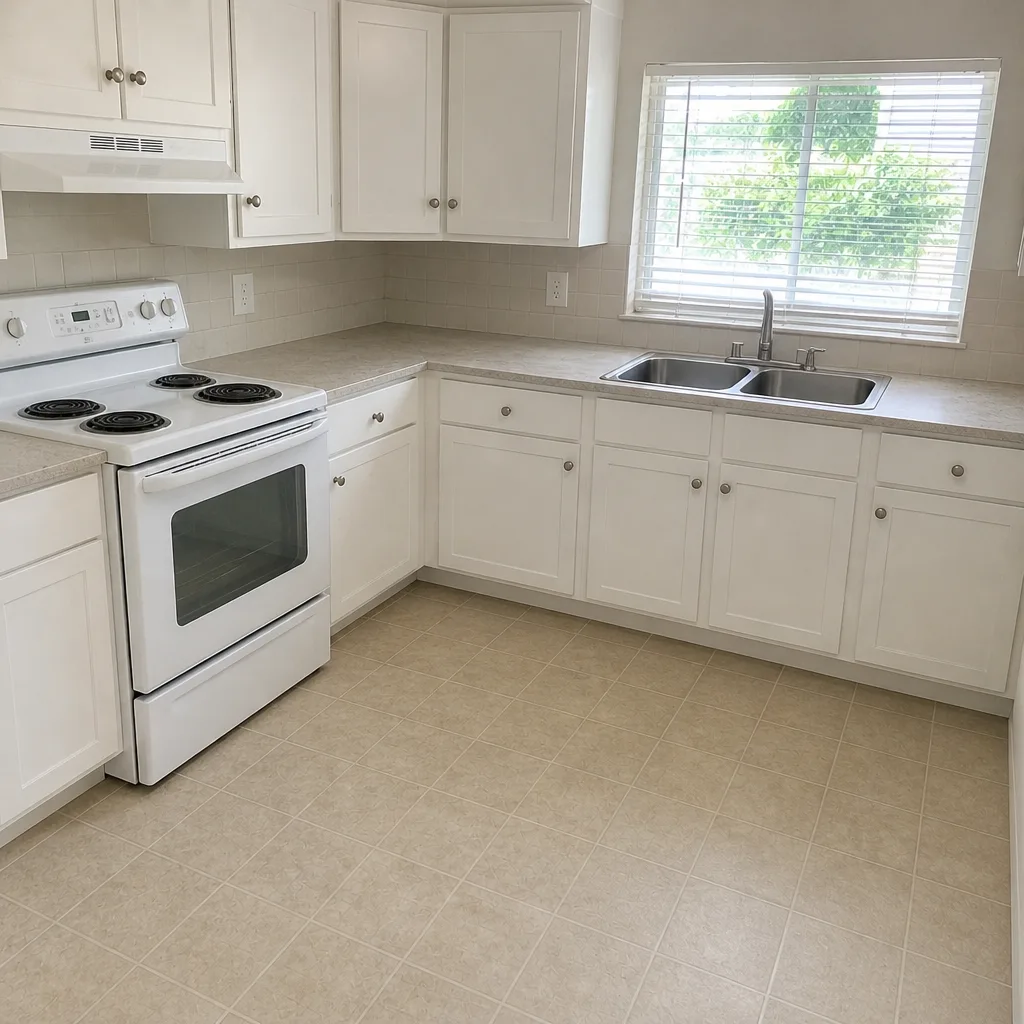
See the difference
 Before
 After
 Before
 After
 Before
 After
When to Call a Professional
Call a licensed contractor when a warning sign is changing, not when it’s just present. A crack that’s wider than it was last quarter, efflorescence that keeps returning after you scrub it, stucco that sounds hollow or has pulled away from a window, spalling that has exposed rebar, a roof that shows sag or interior stains that reappear after rain, or doors and windows that have stopped working – those are all calls. Two or more of them together is a call this week. Structural repairs beyond cosmetic patching usually require a licensed contractor and may require an engineer, and any structural work that’s eligible for a permit should have one pulled and inspections signed. If you’re not sure which list you’re on, ask. Barrett & Sons Construction Miami Gardens offers free estimates in Miami Gardens – call (844) 797-8316. You can also request a free second opinion on any written estimate you’ve already been given from another contractor.
Frequently Asked Questions
No. A stair-step crack that’s been there for years without widening, isn’t wet, and isn’t at a corner or a lintel is often stable and can be watched. It’s serious when it’s new, growing, at a corner or offset, or appears with other signs like doors that stick or interior stains.
Efflorescence is the white powdery salt deposit left when water moves through block or stucco and evaporates. A single bloom after a rainy week is normal. A recurring bloom means water is continuously traveling through the wall, and that’s worth a call.
Check the roofline from the driveway, look at the gutters and downspouts after a rain, and check every interior ceiling corner with a flashlight. That’s enough to know whether to call someone. You shouldn’t walk a residential roof yourself in Miami Gardens – the surfaces can look stable and be quite the opposite.
When water sits for more than a few hours after a storm, runs back toward the house, or keeps washing out the same bed of mulch. Those signals typically precede visible foundation cracks by 12 to 18 months, so catching them early is the cheapest fix in this guide.
Spiderweb cracking is cosmetic. Hollow stucco, stucco that’s pulling away from a window or door, or a crack that widens seasonally are signs of water behind the wall and a call to a licensed contractor. Cosmetic cracks get patched and painted. Hollow stucco needs the substrate checked.
An inspection from a licensed contractor is commonly quoted free or low-cost, because the point is to provide a written scope. An engineer’s structural letter, when needed, is a separate fee and varies by scope. Barrett & Sons Construction Miami Gardens provides free estimates in Miami Gardens – call (844) 797-8316 for a written scope with change orders before any work proceeds.
The Bottom Line
Reading warning signs is a skill, not a talent, and location is the diagnostic. Stair-step cracks at a corner or lintel mean something different from a crack mid-run. Efflorescence, spalling, and stucco delamination are the South Florida symptoms most national guides ignore. Drainage shows up 12 to 18 months before the crack it causes. Watch the cosmetic ones, photograph everything with a date, and call a licensed contractor when two or more signs on the structural list are present. When it’s time to fix any of it – or to plan a project that folds in the repair – call (844) 797-8316. Every scope, allowance, and price change arrives in writing before a nail moves, every eligible permit is pulled and inspected, and every completed job is backed by our written 90-Day Done Right Promise.
Written by the team at Barrett & Sons Construction Miami Gardens.