
Last updated November 17, 2026
 Driveway & pavers
 Kitchen remodeling
 Bathroom remodeling
 Home additions & ADU
 Roofing
 Windows & doors
 Fence
Free written scope consultation - allowances, timeline, and change-order rules on paper before a single trade is scheduled
Driveway & Pavers Maintenance Schedule: What to Do and When
The worst time to seal a paver driveway in Miami Gardens is September. The humidity won’t let the sealer cure properly, and you’ll lock moisture in rather than out. But that’s exactly the month most homeowners step outside, see their pavers looking faded and milky, and want to do something about it right now. Acting in that moment is how a driveway that should last thirty years gets a rubbery, peeling topcoat that costs more to strip off than to have done right in the first place. Your paver driveway doesn’t age on the national average. It ages on South Florida’s schedule: a wet season that would qualify as a monsoon anywhere else, brutal UV from June through October, and salt air if you’re a few miles east of the turnpike. This guide is that schedule, month by month.
Quick Answer
In South Florida, the right time to seal pavers is the dry season, ideally December through April, when humidity stays below 70 percent and overnight temperatures hold above 50°F for at least 48 hours. Polymeric sand joints should be inspected and topped off every spring before the wet season arrives in May. Everything else is simple habit: sweep weekly, wash monthly, and get one professional inspection a year to catch base problems while they’re still cheap.
Styles & brands we work with
- Kitchen remodeling
- Bathroom remodeling
- Home additions & ADU
- Roofing
- Windows & doors
- Driveway & pavers
- Fence
Table of Contents
- Why a Miami Gardens Paver Calendar Looks Nothing Like a National Checklist
- The Month-by-Month Maintenance Calendar
- Polymeric Sand: Inspect and Refresh Before Every Wet Season
- The Correct Sealing Window in South Florida
- What to Look For in October After Hurricane Season
- Homeowner Tasks vs. the Annual Professional Inspection
- Cleaning, Weeding, and Mildew: The Seven-Minute Weekly Habit
- Common Mistakes to Avoid
Why a Miami Gardens Paver Calendar Looks Nothing Like a National Checklist
Most paver maintenance advice you’ll find online was written for a climate with four seasons and a frozen winter. That schedule assumes your biggest enemy is frost heave. In Miami Gardens, frost is not a concern. Your enemies are rain volume, sun, and salt.
Miami Gardens averages well over 60 inches of rain a year, and most of it lands between May and October. That means the ground under your driveway spends half the year saturated, then bakes through a dry season while the sun works on the surface. Paver joints open up and close, sand shifts, and water finds its way into the base. If that base is a properly compacted Class II limerock – which is what South Florida code expects under a paver drive, not the gravel you’ll see in Northern guides – it handles the cycle well. If the base is thin or poorly drained, the same cycle turns your driveway into a wavy mess within a few seasons.
Salt changes things too. If you’re near the eastern edge of Miami Gardens, the breeze carries enough salt to pit lower-grade pavers and dull a sealer faster than uv alone would. That’s one reason we lean on Belgard and Techo-Bloc when we install or reset a drive: those lines hold up to coastal exposure and you can look up the specs yourself.
The point is simple. A checklist written for Ohio will tell you to winterize in October. Here, October is when you should be out inspecting for damage that hasn’t shown up yet.
The Month-by-Month Maintenance Calendar
Here’s the schedule we hand homeowners across Miami Gardens and the surrounding neighborhoods. It follows our two real seasons, not a generic four.
Dry Season: November through April
- November: Full inspect after the wet season. Walk every square foot, look for sunken pavers, listen for hollow sounds underfoot, and check the edges for shifting.
- December: Best sealing window opens. Humidity drops, temperatures stabilize, and a quality sealer can cure properly over the next few days.
- January: Deep clean. Pressure wash at moderate pressure, treat any mildew or algae that grew during the wet months, and let it dry thoroughly.
- February: Edge restraint check. This is the time to reset any border pavers that have shifted or pulled away from the house, garage, or retaining wall.
- March: Polymeric sand top-off. Before the first real rains, the joints should be firm and filled to about 1/8 inch below the paver surface.
- April: Final pre-season check. Sweep, spot-clean, and look for any small chips or cracks you’ll want addressed before heavy rain.
Wet Season: May through October
- May: Watch the joints. This is when you find out whether your polymeric sand held or washed out.
- June through September: Monthly cleaning habits. Sweep weekly, wash monthly, and stay on top of weeds and ant colonies.
- September: Resist the urge to seal. This is when most homeowners want to act and when sealing does the most damage.
- October: Post-hurricane-season inspection. This is the critical one, and we’ll cover it in detail below.
If you already have a paver driveway installed by our team, this calendar is baked into how we build it – see our Driveway & Pavers in Miami Gardens page for what goes into a proper install.
Polymeric Sand: Inspect and Refresh Before Every Wet Season
Polymeric sand is what keeps your paver joints tight. When it’s intact, water runs off the surface and into your drainage plan, weeds can’t get a foothold, and ants find nowhere to nest. When it fails, all three problems show up at once, and they compound.
Here’s the pattern we see most often in Miami Gardens. Polymeric sand washes out in one corner of the driveway during a heavy July storm. Water collects in that joint. Weeds find the gap. Ants follow the moisture. By the next spring, you have an erosion channel under the pavers that a fresh layer of sand won’t fix – it’ll just wash out again.
The inspection itself takes about five minutes. Walk the driveway with a broom and look for joints where the sand has dropped more than a quarter-inch below the paver face. Those are the ones to refill before the wet season. Topping off polymeric sand properly means cleaning out the joint, filling it to the right depth, and misting it correctly so it cures as a single unit rather than a loose dust that washes away at the first rain. It’s a job most homeowners can learn, but the failure mode is silent and you don’t find out until August.
Scheduling this for March or April, right before the wet season, is the highest-value maintenance step on this whole list. It’s also the one most often skipped because everything looks fine in February.
The Correct Sealing Window in South Florida
Sealer protects the surface from UV, keeps stain out, and stabilizes the color. It also traps moisture if applied wrong, and in a climate with 60-plus inches of rain a year, that trapped moisture takes a toll.
The conditions that matter are specific:
- Air temperature at application and for 48 hours after: between 50°F and 90°F. In Miami Gardens, the upper bound is the one that bites in summer.
- Humidity: below 70 percent. This is why September and early October are bad windows even when the weather looks fine at 9 a.m.
- Ground moisture: pavers should be fully dry for 24 hours before application and stay dry for 24 hours after.
- Rain forecast: no rain expected for at least 24 to 36 hours. Summer pop-up storms make this almost impossible from June through September.
The practical window is December through April. That’s also when we’re not fighting the daily thunderstorm cycle, so the work can be scheduled in a predictable way. If you’ve been told you can seal anytime as long as it’s not raining, that’s not accurate for South Florida, and the cost of getting it wrong is a cloudy or rubbery finish that has to be stripped – a job that’s more expensive than the original sealing.
What to Look For in October After Hurricane Season
October is the most important inspection month of the year, and it’s the one almost nobody does. Here’s the pattern we’ve seen time and again in Miami Gardens: the driveway looks fine in October. By March, there’s a wobble near the garage. By June, there’s a settled area that holds water. The homeowner calls us in July and doesn’t understand how it all happened – the answer is that it happened in October and nobody looked.
Post-hurricane-season inspection items:
- Sunken pavers along the garage apron: Water pools against foundations and softens the base. If you can see a puddle in the same spot two days after a rain, you’ve got a base problem forming.
- Lifted or tilted border pavers: Edge restraint damage is common after heavy rain and usually starts as a half-inch tilt.
- Hairline cracks in individual pavers: Not a structural issue by themselves, but if they cluster, the base beneath them is moving.
- Mildew in shaded corners: The northeast corner of most drives in Miami Gardens is shaded half the day. Mildew there isn’t a surface problem; it’s a sign that area stays wet longer than the rest.
- Sand settlement near the street: Sand migrates downhill. If your street-side joints are empty, the whole drive is drying out from the top.
- Weeds emerging in joints that were clean in June: A reliable early sign that polymeric sand has failed in that section.
Every one of those is cheap to fix in November and expensive to fix in July. The October inspection is the single biggest cost-avoidance step in the entire schedule.
Homeowner Tasks vs. the Annual Professional Inspection
Most of the maintenance on this schedule costs zero dollars and half an hour. That’s the truth of paver ownership, and we tell homeowners this before we ever quote a job. The professional inspection is one thing a year, and it’s not there to sell you something. It’s there because two specific problems – base settlement and edge restraint failure – are almost invisible from above and can be caught early or caught late, at very different prices.
What you can do yourself, anytime, at no cost:
- Sweep the driveway weekly to keep grit out of the joints.
- Wash with a hose and a mild detergent monthly during the wet season.
- Pull weeds by hand as soon as you see them.
- Inspect joints visually before each rain if you want to stay ahead of it.
- Use a shop broom to displace standing water after storms.
What to call a pro for:
- Polymeric sand top-off across the full driveway (doable yourself, but the failure mode is silent).
- Sealing (again, technically a homeowner task, but rarely executed correctly in South Florida humidity).
- Any suspected base issue: settling, ponding, or a wobble underfoot.
- Edge restraint repair or resetting on areas abutting the house, garage, or walls.
- Any paver pulling away from a foundation or structural element.
One inspection a year, in November or December, catches the rest. That’s the deal. We’d rather tell you a drive is in good shape than sell you a reset you don’t need.
Cleaning, Weeding, and Mildew: The Seven-Minute Weekly Habit
The homeowner who does seven minutes a week spends far less over twenty years than the one who does two hours twice a year. Weekly consistency is what keeps the wet-season problems from setting in.
- Walk it (2 minutes): Broom in hand, walk the full drive. Look down.
- Sweep out grit (3 minutes): Push debris toward the street or the drain, not into the joints.
- Spot-check joints (1 minute): Pick three random sections. If any joint is filled less than a quarter-inch below the paver face, note it.
- Pull weeds (1 minute): Every week. Not every month. Weekly is the difference between a 30-second job and a Saturday.
Mildew in shaded areas should be treated with a diluted household bleach solution (a quarter cup per gallon of water) applied with a pump sprayer, then rinsed after 10 minutes. Ant colonies in joints get treated the same way, but the underlying fix is polymeric sand: no gap, no colony. If you’re doing landscaping work too, our Fence Installation in Miami Gardens page has the same kind of maintenance schedule for wood and vinyl fences.
Common Mistakes to Avoid
- Sealing in September or October. The humidity hasn’t broken yet. The sealer won’t cure right and you’ll lock moisture in. Wait for December.
- Pressure washing at full blast. High pressure strips polymeric sand right out of the joints and etches the paver face. Moderate pressure, wide fan nozzle, keep the wand moving.
- Skipping the March polymeric sand top-off. Then wondering in August why the joints are full of weeds. The top-off is the single cheapest preventive step on the list.
- Treating a sunken paver as a surface problem. Resetting one paver without checking the base under it means it’ll sink again within a season. The base is the answer or it’s not the problem.
- Sealing over damp pavers. Even in December, pavers that got rained on two days earlier can still be holding moisture. They have to be bone dry.
- Letting ant colonies run their course. In South Florida, ants nest in dry polymeric-sand joints and tunnel under pavers. They’re not just annoying – they accelerate joint failure.
- Assuming October looks fine after a storm means it is fine. The damage is underneath. Look in October, or find it in July.
See the difference
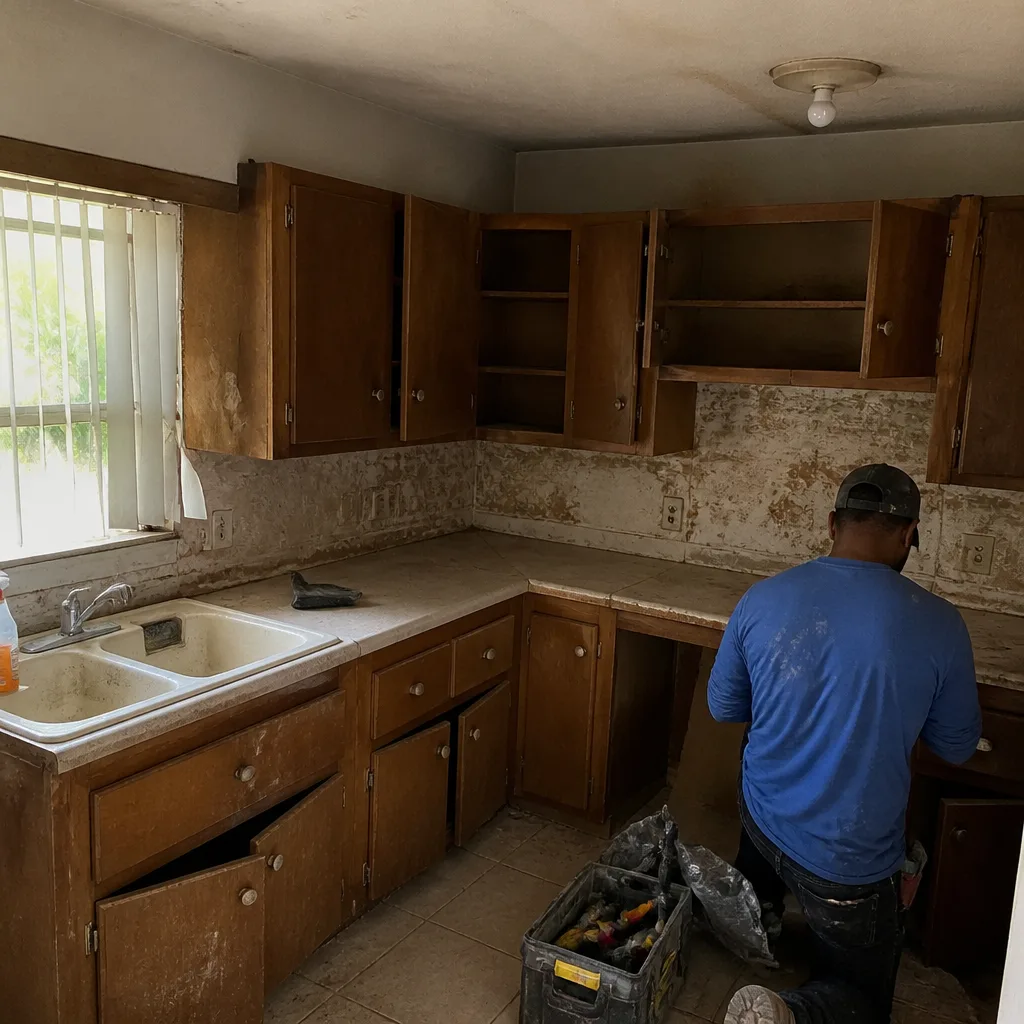 Before
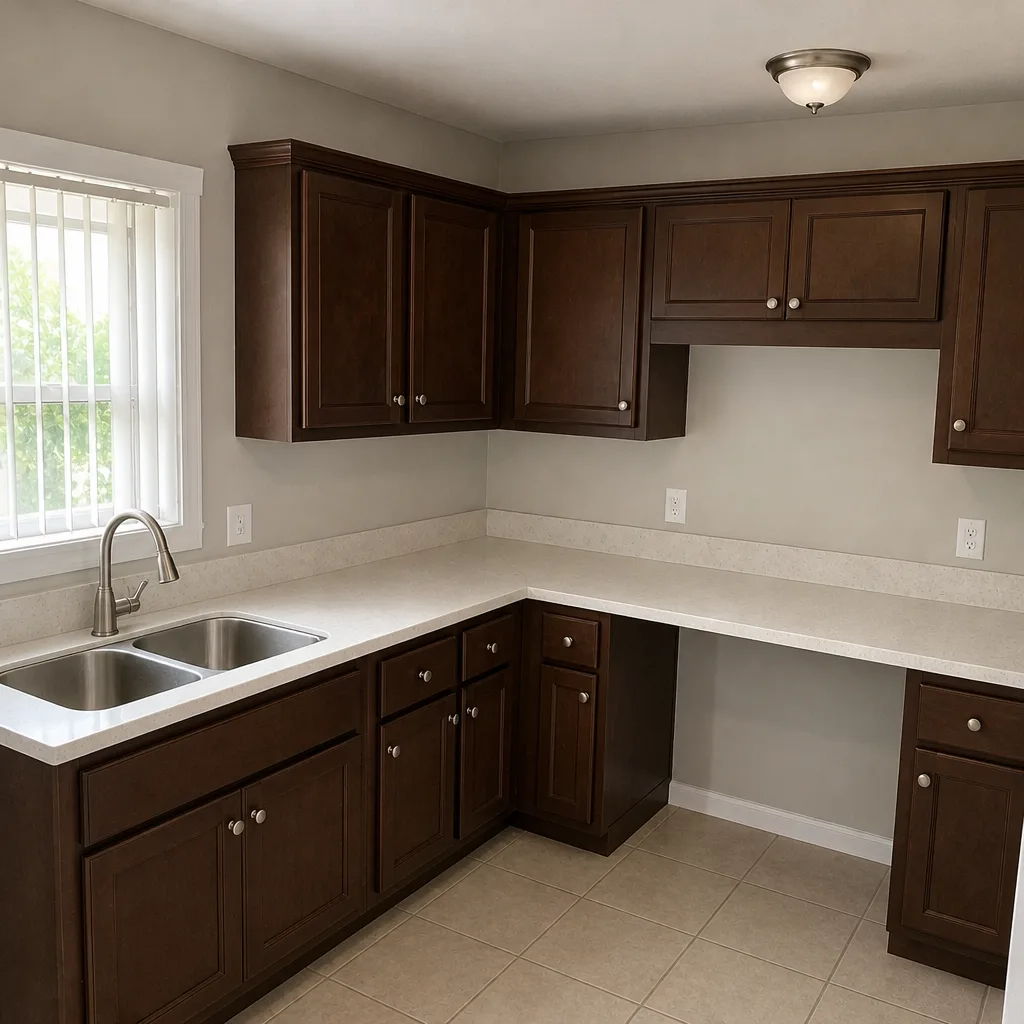 After
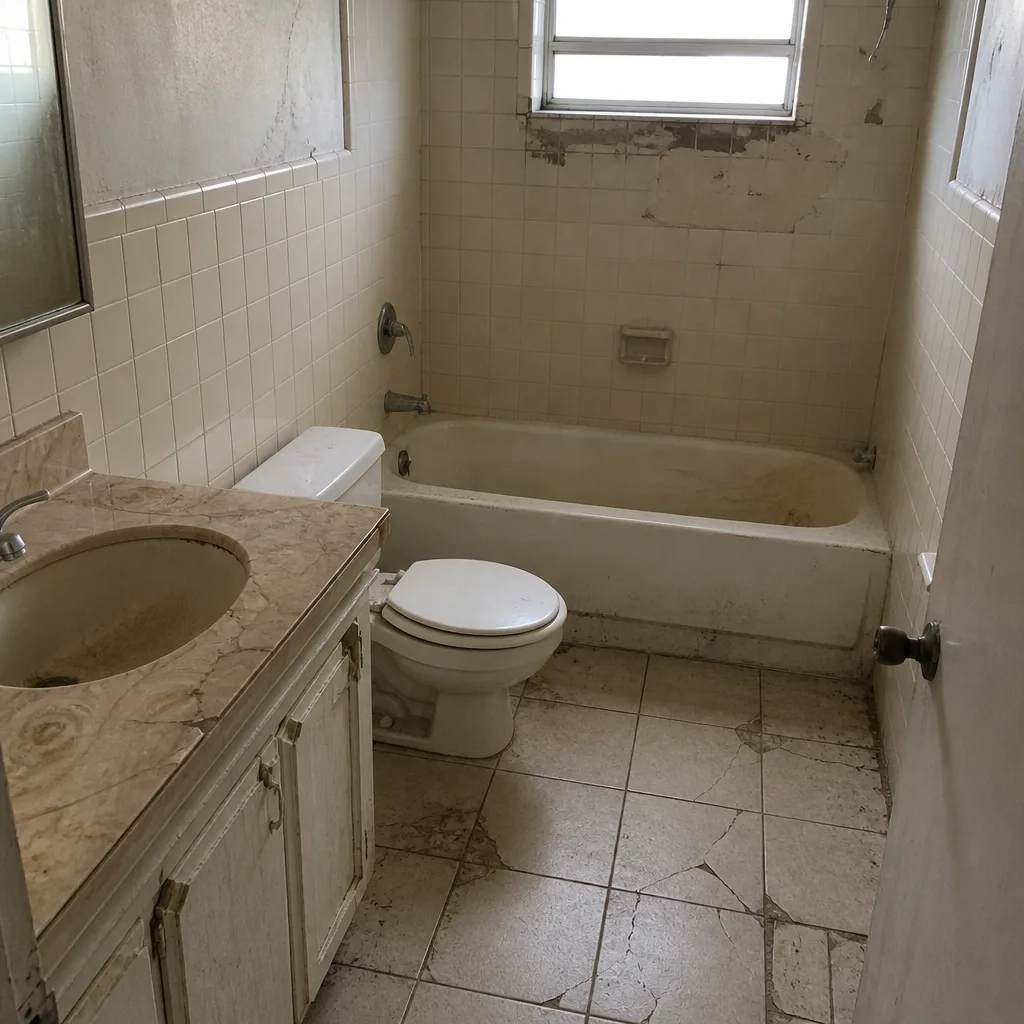 Before
 After
 Before
 After
When to Call a Professional
Call us when you see any of the following: ponding water in one spot two days after a rain, pavers rocking underfoot, a drive that’s pulled away from the garage or house, polymeric sand that won’t hold more than a season after top-off, or mold and mildew that keeps returning to the same area after cleaning. Those point to a base or drainage issue that surface maintenance won’t solve. It’s the same principle we apply on the Home Additions & ADU in Miami Gardens side of our work – the foundation decides everything above it.
Barrett & Sons Construction Miami Gardens offers free estimates in Miami Gardens. We’ll walk the drive with you, write down what we see in plain language, and give you a fixed written price with change orders if anything shifts during the work. Call (844) 797-8316 to schedule.
One note. If your driveway needs a reset, re-sand, or a repair that touches the base, we pull permits where the work requires them and we sign off on inspections. Miami-Dade has opinions about driveways that cross sidewalks and swales, and it’s cheaper to know that up front than mid-job.
Frequently Asked Questions
The best month is January or February. December through April works; January and February are the most reliable. Humidity is lowest and temperatures are stable, so the sealer cures correctly. Call (844) 797-8316 for a free estimate on sealing your drive.
Once a year, in March or April, before the wet season starts. That’s the baseline for a typical Miami Gardens home. If your driveway drains poorly or sits under shade most of the day, it may need a mid-season touch-up in July or August. Call (844) 797-8316 to have a crew look at it.
You can, but the margin for error is narrow because of humidity. Sealing wet pavers, sealing at the wrong humidity, or sealing too early or late in the day leaves a cloudy or sticky coat that has to be chemically stripped – a more expensive job than the original sealing would have been. Call (844) 797-8316 for a free estimate and a straight answer on whether your drive actually needs it.
Because the joint gap is where the moisture and warmth sit. Polymeric sand that’s intact closes the gap and takes away the nesting site. If ants keep coming back to the same spot, that joint has lost its sand and needs a refill, not just a spray. Call (844) 797-8316 for an inspection.
Look for ponding water, sunken pavers near the garage, tilted or lifted border pavers, hairline cracks that cluster, and mildew in shaded areas that stays wet longer than the rest. All of those point to base or drainage issues that are cheap to fix in November and expensive by summer. Call (844) 797-8316 for a post-season inspection.
Small maintenance tasks – a polymeric sand top-off, a reset of a few pavers, a spot-seal repair – are typically a few hundred dollars. A full re-seal of a two-car drive runs into the low four figures depending on square footage and sealer type. A full reset or base repair is a different job at a different price. We give fixed written estimates and won’t change a number mid-job without a written change order. Call (844) 797-8316 – estimates are free.
The Bottom Line
Your paver driveway in Miami Gardens needs three things done on time, every year. Polymeric sand topped off in March, before the wet season. Sealing in the December-through-April window, not in September when humidity is still high. A real inspection in October, after hurricane season, when the damage is there but hidden. Everything else comes back to simple habits: sweep weekly, wash monthly, pull weeds while they’re small. Do those three moves and a quality paver install – Belgard, Techo-Bloc, or any properly installed drive on a real limerock base – will outlast the house. Skip them, and you’ll be resetting pavers by year ten. Want a second set of eyes on what’s under your drive? Call us. Free estimate, written price, and no games. Visit the Barrett & Sons Construction Miami Gardens home page or call (844) 797-8316.
Written by the team at Barrett & Sons Construction Miami Gardens.