
Last updated November 17, 2026
 Driveway & pavers
 Kitchen remodeling
 Bathroom remodeling
 Home additions & ADU
 Roofing
 Windows & doors
 Fence
Free written scope consultation - allowances, timeline, and change-order rules on paper before a single trade is scheduled
The Complete Driveway & Pavers Guide for Miami Gardens Homeowners
Most driveway paver failures in South Florida happen six inches below the surface, not on top of it. The stone you pick matters, but the base under it decides whether that stone is level in five years or floating in ten. Miami-Dade’s soil goes from baked clay in May to saturated muck in September, and that wet-dry swing pushes and pulls on a driveway slab or paver field hard enough to crack what wasn’t built for it. No premium travertine or Belgard paver saves a base that was thrown down too thin. This guide walks Miami Gardens homeowners through the decisions that actually determine how long a driveway lasts: soil prep, flood zone rules, material choice under this sun and salt air, HOA and right-of-way checks, and how to read a quote line by line.
Quick Answer
Installing driveway pavers in Miami Gardens typically runs $9 to $18 per square foot installed, and a standard two-car driveway of about 600 square feet lands around $5,400 to $10,800. The number that matters more than the price per foot is the base depth and compaction spec in your quote, because Miami-Dade’s expansive clay soil needs a deeper, properly compacted base than the four inches most national guides recommend. Skip that, and the most expensive pavers on the block will still heave, settle, and puddle within a few rainy seasons.
Styles & brands we work with
- Kitchen remodeling
- Bathroom remodeling
- Home additions & ADU
- Roofing
- Windows & doors
- Driveway & pavers
- Fence
Table of Contents
- Why Miami-Dade Soil Changes the Whole Job
- Flood Zones and Permeable vs. Impermeable Pavers
- Travertine, Concrete, or Brick in South Florida Sun and Salt Air
- HOA Covenants and County Right-of-Way Before You Order
- How to Read a Paver Quote Line by Line
- The Install Sequence Done Right
- Sealing, Maintenance, and Hurricane Prep
- What We See Across Miami Gardens Neighborhoods
Why Miami-Dade Soil Changes the Whole Job
The first thing to understand is that you are not building on dirt, you are building on a soil that moves. Much of Miami-Dade County sits on expansive clay mixed with marl, and that ground swells when the summer rains soak it and shrinks back down through the dry winter. A driveway base has to survive that cycle, not just hold up on the day of install. This is the single biggest reason driveways that look great for one season start to dip, rock, and pool water by the third.
What that means in practice:
- Base depth. Where a generic guide says four inches of crushed aggregate, a driveway on Miami-Dade clay usually needs six to eight inches, and sometimes more, laid and compacted in lifts rather than all at once.
- Compaction. Each lift has to be machine-compacted to a real density spec, not just tapped flat. Loose base is a sponge.
- Subgrade prep. The native soil underneath needs to be scarified, graded, and drained so the base isn’t sitting in a bathtub of trapped water.
- Drainage slope. A driveway has to shed water away from the house and toward the street or a drainage point, and the slope has to account for the base thickness, not just the top surface.
We’ve watched driveways across Miami Gardens fail in the same pattern: a contractor skimped the base to save aggregate, the first wet season saturated it, and the pavers spread and sank at the apron. Premium stone can’t compensate for that. The base is where the money should go first.
Flood Zones and Permeable vs. Impermeable Pavers
Before a paver is ordered, you need to know what flood zone the property sits in and how much of the lot the driveway covers. Parts of Miami Gardens fall into Zone AE and other areas into Zone X. The zone drives your flood insurance, and it also shapes how a driveway should drain. Long, flat, impermeable surfaces push stormwater onto the street, onto a neighbor, or back toward the house, and in a heavy South Florida rain event that water has nowhere fast to go.
What the county actually cares about, and what homeowners should ask about:
- Lot coverage. Most hardscapes count against allowable impervious surface, and expanding a driveway can push you past what your lot allows. That’s usually a county or city review item, and it’s exactly the kind of thing to confirm before a crew shows up.
- Permeable options. Permeable pavers, and pavers laid with wider joints and open-graded base, let water infiltrate instead of run off. They’re worth considering in low, flood-prone pockets of Miami Gardens, especially near the more saturated northeastern blocks.
- Drainage points. Where does the water sheet to? A graded swale, a channel drain, or the street. This has to be designed, not improvised.
Here’s the plain version: if a contractor can’t tell you your flood zone or your allowable lot coverage before quoting the job, they haven’t looked at the property. The county’s rules aren’t a hurdle, they’re the reason the driveway drains when it matters. When a job needs a permit and an inspection, the inspector is working for you.
Travertine, Concrete, or Brick in South Florida Sun and Salt Air
Miami Gardens doesn’t have a mild climate for hardscape. You have year-round high UV, heavy summer rain, and salt air that reaches well inland. Each paver type fails a little differently here, and the “best” choice depends on which condition you’re worried about most.
Travertine. Beautiful, cool underfoot, and popular for the same reason it’s used around Florida pools. It handles heat better than concrete, but a lower-grade travertine can spall and pit under constant wet-dry cycling, and smooth travertine gets slick when wet. Choose a tumbled or honed finish and a dense grade, and it holds up well. Cream and ivory tones stay cooler.
Concrete pavers. The workhorse option, and the most forgiving on budget. Concrete pavers from a real brand like Belgard or Unilock resist UV fading far better than poured concrete, which is prone to hairline cracks in South Florida’s soil movement. The tradeoff is heat and a plainer look unless you pick a textured series.
Brick. Warm color, strong character, and it holds color for decades. Brick costs more and takes more skill to set cleanly, but under South Florida sun and rain it ages gracefully and won’t fade like cheap pigment. A clay brick paver is a lifetime decision.
Whatever you choose, the surface has to match the drainage plan. A paver that lets water pass through in one section and traps it in the next is asking for staining and settlement. And never install a high-slip stone on the slope toward the street, no matter how good it looks on a sample board.
HOA Covenants and County Right-of-Way Before You Order
This is the step almost everyone skips, and it’s the one that costs the most to undo. Many Miami Gardens neighborhoods have HOA covenants that restrict paver color, style, and the percentage of the lot that can be paved. Some require a specific driveway footprint or board approval before work starts. Order the wrong paver and you’re pulling a brand-new driveway because a covenant said so.
Do this before a single paver is delivered:
- Get the HOA’s architectural or design guidelines and read the driveway sections. Look for approved colors, materials, and edge details.
- Submit the design for HOA approval in writing, and keep the approval on file.
- Check the Miami-Dade right-of-way setback. A driveway can’t cross into the county’s public right-of-way or an easement without permission.
- Confirm whether a permit is required for the work, and who pulls it.
- Only then order materials and schedule the install.
When we quote a Miami Gardens driveway, all of that gets settled before the order goes in, because a paver that arrives before the approval is money sitting on the curb. And any change to the design after approval should show up as a written change order before the work moves, never as a surprise at the end.
How to Read a Paver Quote Line by Line
Most of the horror stories we hear from homeowners start with a quote that looked low and a final bill that didn’t match it. The gap is almost always in the things the low quote left out. Read your estimate for these specific line items, because each one is real money and real longevity.
- Base depth and material spec. It should state inches of base, the aggregate type, and compaction in lifts. A number and a spec, not “proper base prep.”
- Edge restraints. The concrete or plastic edge holding the field in place. Without it, pavers spread at the edges and the whole pattern loosens.
- Polymeric sand. The joint sand that locks pavers together and resists weed growth and washout. It should be listed with the brand or type, not buried in a labor line.
- Drainage and slope. How water leaves the driveway, and whether a channel drain or swale is included.
- Demo and haul-away. Removing the old surface and disposing of it. Easy to miss, expensive if it shows up later.
- Permits and inspection. Who pulls the permit and who’s responsible for passing inspection.
- Allowances. Any material or drainage item quoted as an allowance needs a dollar figure on paper. An allowance that isn’t on paper is a surprise waiting for a date.
Ask for a written, line-item estimate and compare the base specs directly, not just the bottom line. A quote that’s $1,500 cheaper with two fewer inches of base and no edge restraint isn’t cheaper, it’s a shorter driveway.
The Install Sequence Done Right
A paver driveway is built in a fixed order, and any step skipped shows up later as a failure. This is the sequence a careful crew follows on a Miami Gardens job:
- Confirm HOA approval, flood zone, lot coverage, and permits.
- Demo the old surface and haul it away.
- Excavate to the correct depth for the base plus the bedding layer plus paver thickness.
- Prep and drain the subgrade so water isn’t trapped.
- Lay the aggregate base in lifts and machine-compact each one to spec.
- Set edge restraints and establish the drainage slope.
- Lay the bedding sand, then set the pavers in the approved pattern.
- Cut edges and details cleanly, then compact the field.
- Sweep polymeric sand into the joints and activate it.
- Clean down and, where specified, seal after the cure window.
Every one of those steps is a place a shortcut can live. The base and edge restraint steps are the ones that decide longevity, and they’re also the easiest to trim on a low bid. When we’re on a Miami Gardens job, the base spec and the compaction get done before anyone talks about the pretty part.
Sealing, Maintenance, and Hurricane Prep
A sealed driveway in South Florida holds its color longer and sheds water better, and in hurricane country that drainage matters. Sealing isn’t a one-size rule, though. A penetrating sealer lets the surface breathe and works well on clay and concrete pavers. A film-forming sealer gives a wetter sheen but can trap moisture or haze if the surface wasn’t fully dry. On travertine, use a sealer rated for natural stone, and never seal over damp joints.
Basic upkeep goes a long way:
- Re-sand joints as polymeric sand washes out or thins, usually every couple of seasons.
- Rinse off salt and pollen before it stains, especially on lighter stone.
- Check the drainage slope and any channel drain before hurricane season, not after.
- Re-seal on the manufacturer’s recommended interval, which is generally every two to four years in this climate.
When a storm is forecast, clear the driveway of loose items and check that water can leave the surface toward its drainage point. A driveway that drains well before the storm is the one that recovers fastest after.
What We See Across Miami Gardens Neighborhoods
The right driveway isn’t the same in every part of Miami Gardens. The soil, the water table, and the HOA rules shift block to block, and that changes what we recommend. In the lower, more flood-prone pockets near the northeastern side, permeable pavers and an aggressive drainage plan make more sense than a solid impermeable field. In neighborhoods with tighter HOA covenants, the color and style are decided by the board, and the smart move is to design within those rules rather than fight them after the fact.
We’ve also seen older driveways where the original slab was poured thin and cracked from years of soil movement, and the paver install becomes a rebuild rather than a resurface. That’s fine, it just has to be quoted honestly. Every scope, every allowance, and every price change should be in writing before work happens, so the number you sign is the number you pay.
If your driveway work turns into a larger project, we handle the related pieces too, from a new fence installation in Miami Gardens along the property line to a home addition or ADU in Miami Gardens that changes how the driveway meets the house. And for everything else we do, you can start from our Barrett & Sons Construction Miami Gardens home page. If you want the driveway-specific service detail, the full page on driveway & pavers in Miami Gardens walks through it step by step.
Common Mistakes to Avoid
- Skipping the base depth check. Ordering off a national guide’s four-inch recommendation on Miami-Dade clay is the fastest way to a settled driveway. Insist on six to eight inches of compacted base in the spec.
- Buying pavers before HOA approval. Covenant violations in Miami Gardens can force removal of a brand-new driveway. Get the board’s approval in writing first.
- Ignoring the flood zone and lot coverage. Paving past your allowable impervious surface can create a compliance problem and send stormwater toward your neighbor or your front door.
- Choosing a slick stone on the slope. A polished surface on the street-side slope is a fall hazard in the rain. Pick a textured or honed finish.
- Accepting a quote with no line items. A lump-sum bid hides whether base depth, edge restraints, and polymeric sand are included. Ask for line items and compare specs, not totals.
- Sealing a damp driveway. Trapped moisture under a film-forming sealer hazes and peels. Wait for a fully dry surface and follow the product’s cure window.
- Skipping the permit. If a contractor says the permit is optional, that’s a red flag. Permits protect you, and the inspection is there to confirm the work is right.
See the difference
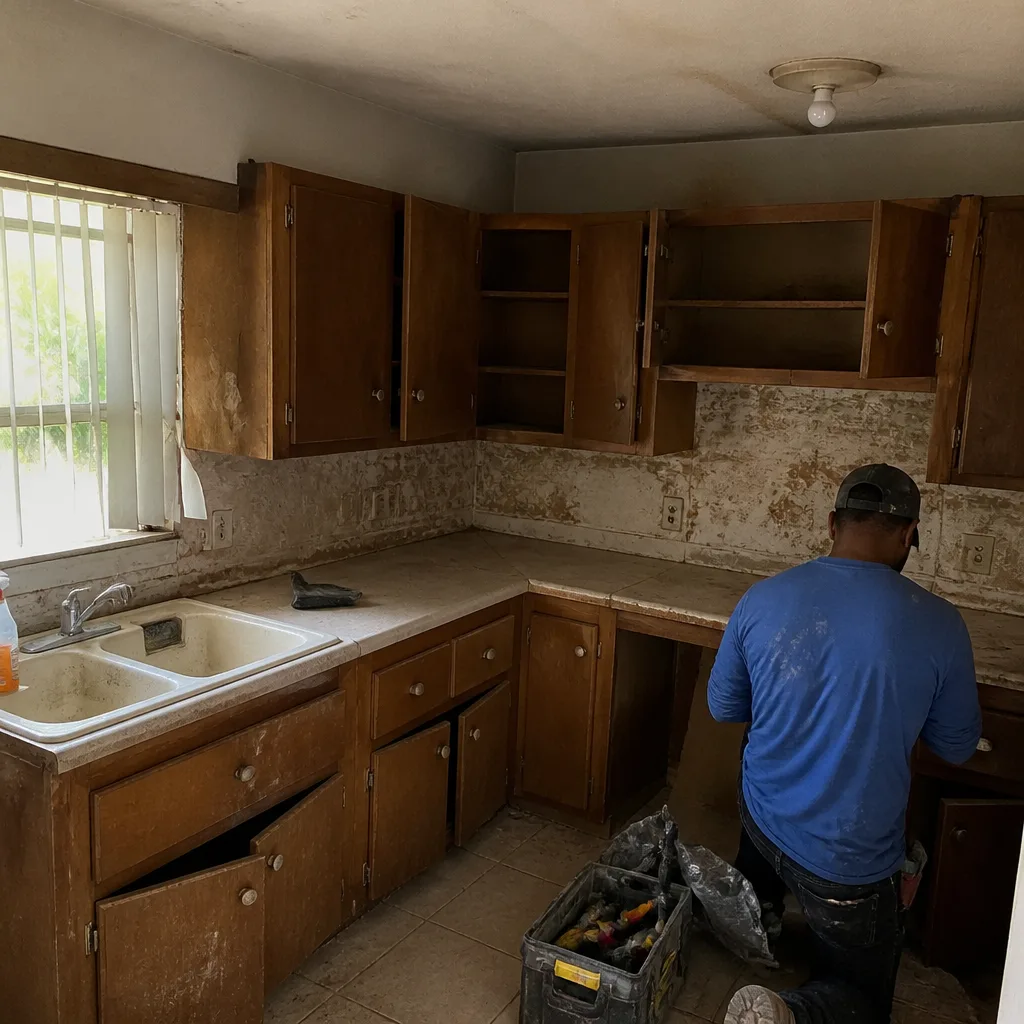 Before
 After
 Before
 After
 Before
 After
When to Call a Professional
Some things you can handle yourself. A paver driveway usually isn’t one of them, and here’s where it becomes clear. Call a professional when your existing driveway is sinking, heaving, or holding water after rain, because that points to a base and drainage failure that resurfacing won’t fix. Call when you’re changing the footprint or expanding paving, since lot coverage and right-of-way rules come into play. Call when your HOA requires approval and a permit, and you want it done once. And call when a low bid looks too good, because the missing base and edge restraint are the parts you can’t see until they fail. Barrett & Sons Construction Miami Gardens offers free estimates in Miami Gardens – call (844) 797-8316. Our crew members have up to 28 years of experience, every eligible job gets permits pulled and inspections signed, and every finished job is backed by the written 90-Day Done Right Promise. We also offer a Free Second Opinion on Any Written Estimate if you want a straight read on a bid you’ve already got.
Frequently Asked Questions
Driveway pavers in Miami Gardens typically run $9 to $18 per square foot installed, so a 600-square-foot two-car driveway lands around $5,400 to $10,800 depending on material and base depth. Travertine sits at the higher end, concrete pavers in the middle, and brick varies with pattern and setting detail. Always compare the base spec, not just the per-foot price. Call (844) 797-8316 for an exact quote – estimates are free.
Plan on six to eight inches of compacted aggregate base on Miami-Dade’s expansive clay soil, laid and compacted in lifts, not the four inches a generic national guide suggests. The deeper base is what keeps the surface stable through the wet-dry cycle. If a quote lists less, ask why before you sign. Call (844) 797-8316 to review your project’s base spec with our team.
Many driveway projects in Miami Gardens require a permit, and expanding paving or changing the footprint almost always triggers county review for lot coverage and right-of-way setbacks. The permit is there to protect you, and the inspection confirms the work was done right. We pull permits and get inspections signed on every eligible job. Call (844) 797-8316 to find out what your project needs.
Yes, permeable pavers are often a smart choice in the lower, flood-prone pockets of Miami Gardens, especially in Zone AE, because they let stormwater infiltrate instead of running onto the street or toward the house. Whether they’re the right call depends on your flood zone, soil, and how the lot drains. We look at all three before recommending a system. Call (844) 797-8316 for a free estimate.
A well-built paver driveway in South Florida lasts 25 years or more, and the difference is almost entirely in the base, the edge restraints, and the drainage. A poorly prepped base can show settlement within a couple of seasons. Properly installed and sealed, the stone outlasts most of what’s around it. Call (844) 797-8316 for a free estimate on getting it built right the first time.
All three work in this climate if matched to the site: travertine stays coolest but needs a dense grade and a nonslip finish, concrete pavers from Belgard or Unilock resist UV fading well, and brick holds color for decades. Your flood zone, drainage plan, and HOA rules narrow the choice. Call (844) 797-8316 and we’ll talk through what fits your driveway.
The Bottom Line
Driveway pavers in Miami Gardens are an engineering decision before they’re a style decision. The base under the pavers, built deeper for Miami-Dade’s wet-dry clay, decides how long the surface lasts. Your flood zone and lot coverage decide how the driveway drains. Your HOA and the county’s right-of-way decide what you’re allowed to build. And the quote you sign decides whether the base depth, edge restraints, and polymeric sand are included or added later. Get those four things right and you’ll have a driveway that’s still level and shedding water through many hurricane seasons. Get them wrong and the prettiest stone on the block won’t save it. Call (844) 797-8316 for a free estimate, and we’ll walk your property before a single paver is ordered.
Written by the team at Barrett & Sons Construction Miami Gardens.