
Last updated November 17, 2026
 Bathroom remodeling
 Kitchen remodeling
 Home additions & ADU
 Roofing
 Windows & doors
 Driveway & pavers
 Fence
Free written scope consultation - allowances, timeline, and change-order rules on paper before a single trade is scheduled
Bathroom Remodeling Maintenance Schedule: What to Do and When
Most bathroom remodels in South Florida show their first real problem within 18 months, and it’s rarely the tile or the fixtures giving out. It’s the grout, the caulk, and the fittings nobody thought to check. Grout in a humid climate needs sealing twice a year, not once every five years like a Minnesota home-improvement blog will tell you. Miami Gardens sits in year-round humidity, draws hard water from the Biscayne Aquifer, and gets enough salt air off the coast to work on your bathroom whether you’re paying attention or not. This guide gives you a month-by-month schedule built for those conditions, so the bathroom you paid for holds up for decades instead of a year and a half.
Quick Answer
A Miami Gardens bathroom needs a small task every month, deep grout and caulk attention every six months, and a full fixtures-and-drainage inspection once a year. The two most skipped items are the wax ring under the toilet and the exhaust fan’s actual airflow (CFM) – both fail quietly and both cause expensive damage. Follow the calendar below and you’ll catch problems while they’re still a weekend job instead of a subfloor replacement.
Styles & brands we work with
- Kitchen remodeling
- Bathroom remodeling
- Home additions & ADU
- Roofing
- Windows & doors
- Driveway & pavers
- Fence
Table of Contents
- Why Miami Gardens Bathrooms Age Differently
- The Month-by-Month Calendar
- Grout and Caulk: The Twice-a-Year Rule
- Checking Your Exhaust Fan’s CFM
- Supply Lines, Shutoff Valves, and the Wax Ring
- Testing GFCI Outlets
- What Your Fixture Brand Expects From You
- Grout Haze vs. Early Mold
Why Miami Gardens Bathrooms Age Differently
National maintenance guides are written for a climate with four seasons and a dry indoor winter. That’s not what a bathroom in Miami Gardens lives in. Relative humidity here stays high most of the year, which means moisture sits in the joints and behind the caulk line longer instead of drying out. Grout that would last five years between sealings up north can start absorbing water in a single humid season down here.
The water matters too. Most of Miami Gardens draws from the Biscayne Aquifer, and that water carries a lot of dissolved minerals. You’ll see it as the white chalky film on shower glass, faucet aerators, and the showerhead. That same mineral load works into grout lines and speeds up staining. If you’ve ever scrubbed a shower and had the haze come back two weeks later, that’s hard water leaving deposits, not your cleaning technique.
Salt air is the third factor, and it’s often underestimated. It’s harder on exterior hardware and any metal fittings in the bathroom – hinges, towel bars, the screws holding the shower door frame. Those go faster here than they do inland. We’ve seen pitting on a shower door hinge at three years that would take eight years to show up in a drier market.
Add all three together and the maintenance cadence is simply tighter. Twice-a-year grout sealing, more frequent caulk checks, and a habit of looking at the small hardware before it corrodes. If you’re planning a bigger update and want the room built to these conditions in the first place, our Barrett & Sons Construction Miami Gardens home page covers how we scope bathroom work from the start.
The Month-by-Month Calendar
Here’s the schedule we recommend to homeowners across Miami Gardens. It’s written as a repeating annual calendar, so you can start any month and just keep cycling through. The heavy items cluster around the start and end of the rainy season, when the humidity swing is largest.
- January: Test every GFCI outlet (the buttons marked “test” and “reset” near wet areas). Check the caulk line around the tub, shower, and sink for shrinking or lifting. Replace the exhaust fan filter if yours has one.
- February: Look at the supply lines under the sink and behind the toilet. Run a finger along them – any dampness or cracking is a warning. Check shutoff valves under sinks and behind the toilet for stiffness.
- March: Clean the exhaust fan grille and blade. Confirm the fan pulls a tissue against the grille when it’s running. Re-caulk any joint that’s opened up near the tub or shower.
- April: Deep-clean grout lines with a soft brush, not a stiff one. Inspect for dark spots or crumbling. Reseal grout this month if it hasn’t been done in the last six months.
- May (pre-rainy season): Check the wax ring area at the toilet base – look for rocking, soft floor, or a faint sewer smell. Remove and soak the showerhead in vinegar to clear mineral buildup.
- June through September: Wipe down the shower after each use where you can, and keep the fan running 20 minutes after you shower. Check grout and caulk monthly since this is peak strain season.
- October: Second annual grout reseal. Re-caulk the tub-to-wall and shower-to-wall seams. Clean the exhaust fan again.
- November: Check under-sink plumbing for drips, check the toilet for leaks by adding food coloring to the tank (if the bowl changes color without flushing, you have a leak). Inspect shower door seals and frames for corrosion.
- December: Year-end walkthrough. Look at your drain stoppers, the shower door tracks, the toilet flush valve. Whole-house check to catch the small jobs before they become spring projects.
If you’ve recently done a full remodel and want the calendar to line up with a fresh install, our Home Additions & ADU in Miami Gardens team can help scope the plumbing and ventilation at the source.
Grout and Caulk: The Twice-a-Year Rule
Grout is a sponge. It looks solid, but cement-based grout is porous and will absorb water if it isn’t sealed. In a Miami Gardens bathroom, that sealing wears off faster than it would in a dry climate because of the humidity and the mineral content in the water. Twice a year is the realistic interval.
Caulk is the flexible joint at the base of the tub, around the shower surround, and where the sink meets the counter. It moves with the house as it expands and contracts in the heat, and it eventually cracks. When it cracks, water gets behind it. That’s where the damage happens.
Here’s what to look for:
- Grout: Any spot that has gone darker than the rest, any white powdery residue that keeps returning after cleaning, any crumbling at edges, or a joint that feels rough when you run a fingernail across it.
- Caulk: Any gap between the caulk and the tub or shower, any peeling at the edges, any spot where the caulk has turned from white to off-white or has a fuzzy look.
Resealing grout is a few hours’ work with cleaner, a brush, and a penetrating sealer. Re-caulking takes a couple of hours and a tube of silicone caulk plus drying time. Neither is complicated. Both get skipped because they aren’t emergencies – until they are.
If you’re re-sealing a floor or shower you just installed, our Driveway & Pavers in Miami Gardens team uses the same hardscape sealing principles on outdoor stone, and it’s a good reminder that surface sealing matters on anything porous.
Checking Your Exhaust Fan’s CFM
The exhaust fan in a bathroom is supposed to pull moisture out of the room. If it’s underpowered, the moisture stays. The industry rule of thumb is 1 CFM (cubic feet per minute) per square foot of bathroom, with a minimum of 50 CFM for a small bathroom. A bathroom that’s 100 square feet needs a 100 CFM fan.
Here’s the quick field test homeowners can do without buying anything:
- Turn the fan on.
- Hold a single square of toilet paper near the grille (about an inch away).
- If the fan pulls the paper against the grille and holds it, the fan is moving air. If the paper falls or barely flutters, the fan is weak, blocked, or dying.
A weak fan causes a specific pattern of damage we see in Miami Gardens bathrooms: mold along the ceiling above the shower, peeling paint on the upper walls, and a bathroom that smells musty in the morning. The fan is often undersized or the duct is kinked or clogged with lint.
If the fan is over 10 years old, replacement is usually the better move than repair. Look for something rated at 110 CFM or above for most bathrooms here, and check that the duct is smooth metal (not flexible foil) so it doesn’t sag and trap moisture. We typically see the bathroom venting into an attic instead of outside on older homes, which just pushes the problem somewhere else – if that’s your situation, it’s worth having a pro correct it.
If your bathroom sits next to a window and you’re thinking about tapping into window performance to help airflow, our Fence Installation in Miami Gardens team installs exterior work daily and can point you to the right contractor if it isn’t in our scope.
Supply Lines, Shutoff Valves, and the Wax Ring
The number one cause of catastrophic bathroom damage isn’t a burst pipe – it’s a slow leak that goes unnoticed. Supply lines under the sink and behind the toilet are the usual suspects. The braided steel lines commonly installed today have a lifespan of about 5 to 8 years. If yours are original to a 2010 or older remodel, they’re past due.
Check for these signs monthly:
- Dampness at the fittings on the supply lines. Even slight moisture is an early warning.
- Cracking or bulging on the lines themselves.
- Stiff or seized shutoff valves. If you can’t turn the valve off cleanly, you can’t stop a leak.
- A toilet that rocks – a rocking toilet usually means the wax ring has shifted, and water is getting under the base.
The wax ring is the seal between the toilet and the floor drain. It’s a small piece, roughly under two dollars in most hardware stores. When it fails, water seeps under the tile and into the subfloor. In Miami Gardens, that moisture in a warm, humid environment is exactly the setup for rot and mold. The first thing homeowners usually notice is a faint sewer smell or a soft spot when they step near the toilet base – and by then, there’s already damage.
We recommend checking the wax ring area every six months. If you can rock the toilet more than a tiny fraction of an inch, or if the tile around the base looks slightly discolored, that’s a call to a plumber or a bathroom contractor. Replacing a wax ring when it’s caught early is a quick job. Replacing subfloor is not.
Testing GFCI Outlets
GFCI stands for Ground Fault Circuit Interrupter, and it’s the outlet type with the small “TEST” and “RESET” buttons. In a bathroom, they’re required by code around anything near water, and they’re the single most important electrical safety feature in the room. They also fail – usually by going silent rather than by visibly breaking.
Testing is a two-minute job:
- Plug in a small lamp or phone charger.
- Press the “TEST” button – the outlet should click off and the lamp should go dark.
- Press “RESET” – the outlet should click back on and the lamp should light.
- If the outlet doesn’t trip, doesn’t reset, or trips repeatedly, stop using it and call an electrician.
Test every GFCI in the bathroom once a month, ideally on the first of the month so you don’t forget. The same applies to any GFCI in the kitchen, garage, or outdoor outlets, but the bathroom matters most because it’s where people are most likely to be near water while holding something plugged in. If you can’t remember the last time this was done, it’s likely been years. We routinely find dead GFCIs during walk-throughs on Miami Gardens remodels, and nobody notices because the outlet still looks fine.
Electrical work is one area where we tell homeowners to call a licensed electrician rather than tackle it themselves. It’s not a job for a weekend warrior, and the permit inspector who checks the work works for you, not for us.
What Your Fixture Brand Expects From You
Premium fixture brands publish maintenance expectations as part of their warranty terms. Ignoring them is how a warranty claim gets denied. Here’s what the major brands expect:
- Delta: Their finishes carry a limited lifetime warranty, but the terms assume regular cleaning with mild soap and water. Abrasive cleaners void the finish coverage. Cartridges are replaceable, and Delta sells service kits – use them instead of trying to force a stuck handle.
- Kohler: Their finishes (especially the Vibrant line) also assume non-abrasive cleaning. Kohler publishes service parts for every fixture, so if a valve starts dripping, the fix is a specific part number, not a complete replacement.
- Moen: Their cartridge-based faucets are designed to be serviced rather than replaced. If a Moen faucet starts dripping, replacing the cartridge is often a 15-minute job with a part that’s still under warranty.
The point here isn’t to memorize the warranty language – it’s to know that every fixture brand has service parts. When something starts dripping or sticking, the right move is to look up the model number and order the part, not to replace the whole fixture or to try to force it with a wrench. Most of these brands publish the model on the underside of the faucet or the inside of the tank lid.
If you’re renovating and choosing fixtures for the long haul, our team installs brands we can look up and stand behind. Ask us about what we’re currently installing when you get a quote.
Grout Haze vs. Early Mold: How to Tell
Grout haze is the powdery film that comes off grout as it cures or as it ages. It’s white to light gray, wipes off easily, and returns because the grout is porous. Mold is different. Early mold in grout lines looks like small dark spots – usually gray-black or green-black – that cluster in the dampest corners of the bathroom, often the bottom of the shower wall and the corner where the tub meets tile.
Here’s the difference that matters:
- Grout haze: Wipes off with a damp cloth. No smell. Light colored. Returns after cleaning because the grout is unsealed.
- Early mold: Doesn’t fully wipe off with plain water. Has a faint musty or earthy smell. Dark spots that get darker over a week. Comes back in the same spot even after scrubbing with a bathroom cleaner.
If it’s early mold, the fix depends on where it is. Surface mold on tile or grout can often be cleaned with a bathroom mold cleaner and improved ventilation. Mold that’s reappearing after cleaning, or appearing on drywall or in the caulk joint, is likely getting moisture from behind the wall – which means the fix is plumbing or ventilation, not cleaner. That’s the point where a contractor needs to look at it. Hidden moisture is what turns a small resealing job into a full wall replacement, and in a humid Miami Gardens house, once moisture gets into a wall cavity it doesn’t dry out on its own.
Common Mistakes to Avoid
- Sealing grout once and forgetting it. A five-year-seal rule from national guides is wrong for Miami Gardens. Twice a year is the honest interval, and grout that goes more than a year without resealing starts absorbing water.
- Using bleach on grout as a regular cleaner. Bleach kills surface mold but also breaks down the sealer faster. It makes the problem worse over a year. Use a pH-neutral cleaner for routine cleaning.
- Ignoring a rocking toilet. The wax ring has already moved if the toilet rocks. Waiting turns a $20 part into a $2,000 subfloor repair.
- Venting the bathroom fan into the attic. We see this on older Miami Gardens homes all the time. It doesn’t remove moisture, it just relocates it to the attic, where it condenses on the roof deck.
- Skipping the GFCI test because “it still works.” A GFCI that hasn’t tripped in years may not trip when it matters. Testing is a two-minute job, and it’s the one piece of safety equipment in the bathroom you actually depend on.
- Assuming a new remodel doesn’t need a schedule. A freshly remade bathroom in this climate starts the clock on day one. The sealing and checking schedule begins the month the tile grout cures.
- Calling a national chain to fix a small leak. A lot of the quotes homeowners bring us are two to three times the local rate for work that a licensed local contractor will do with a fixed price and a written scope. Get a second opinion before you sign anything – that’s why we offer one free.
See the difference
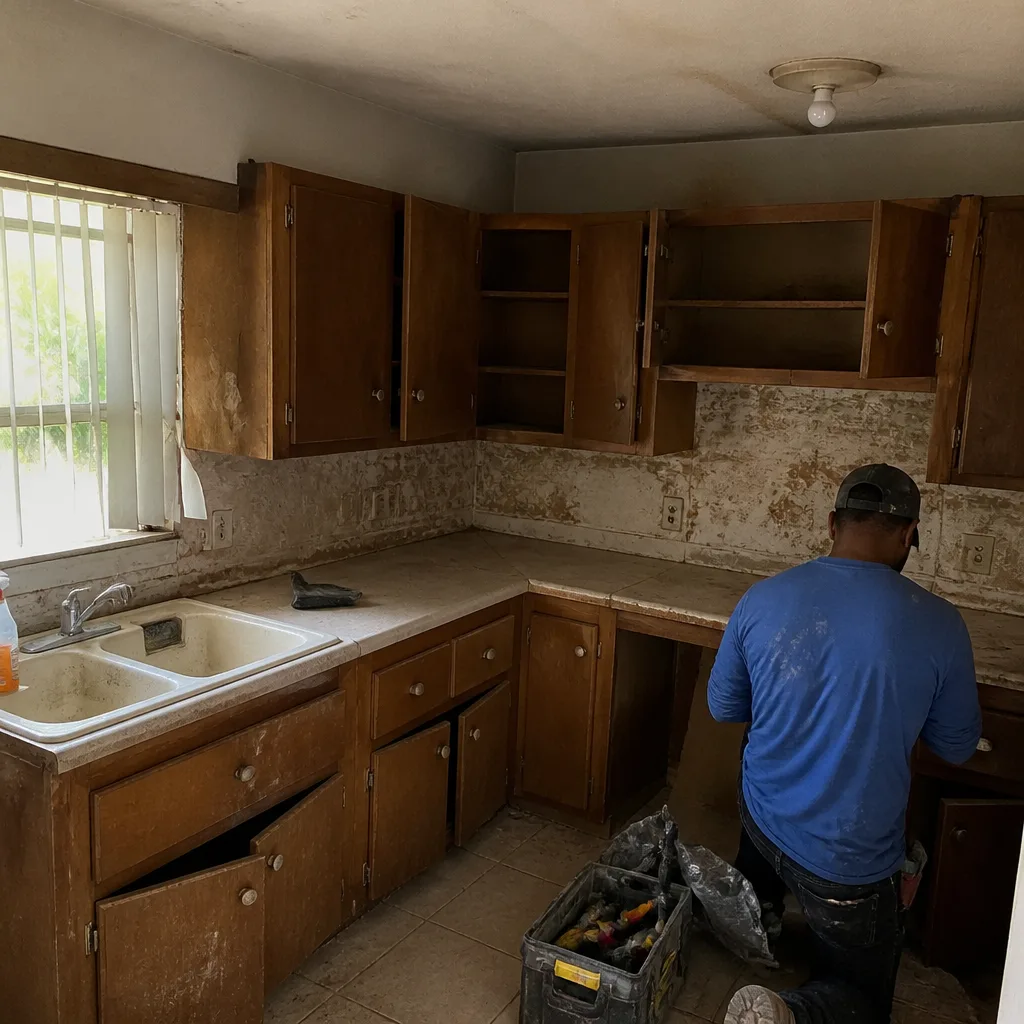 Before
 After
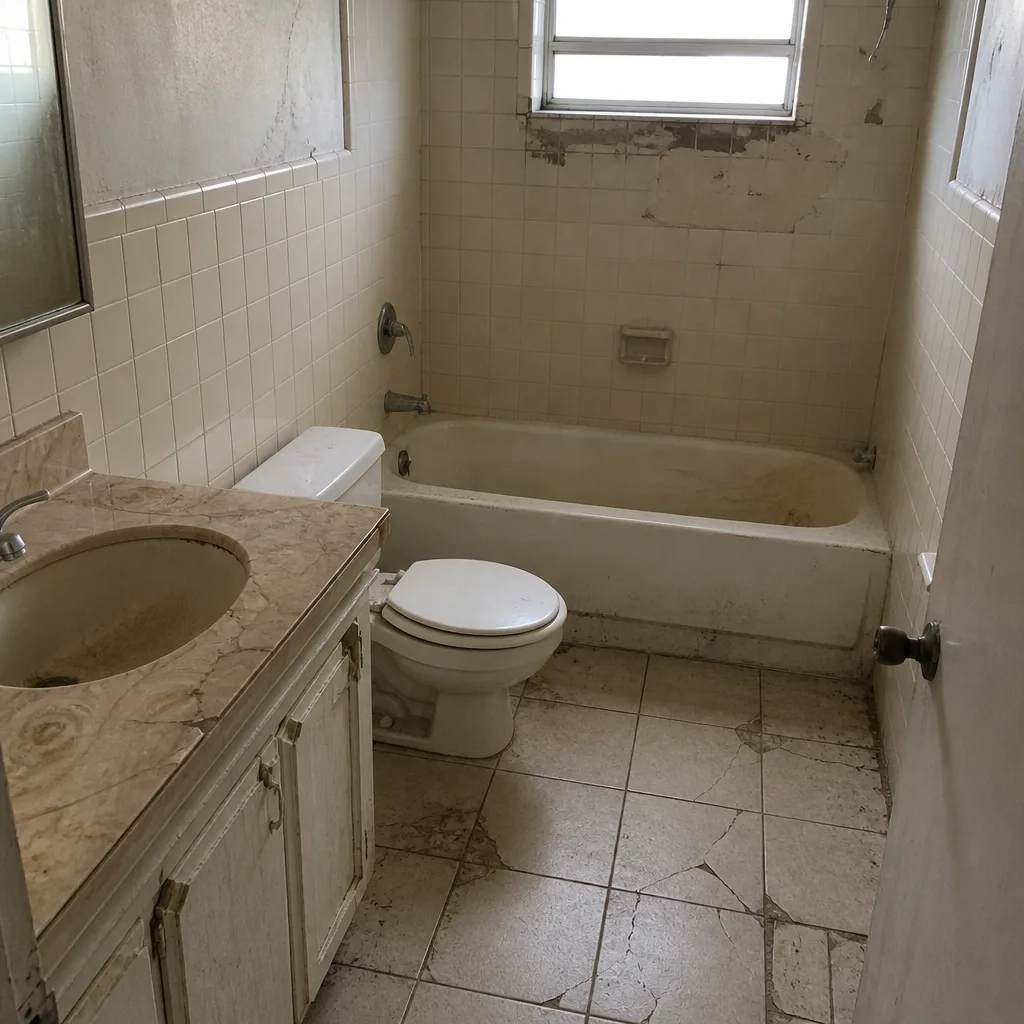 Before
 After
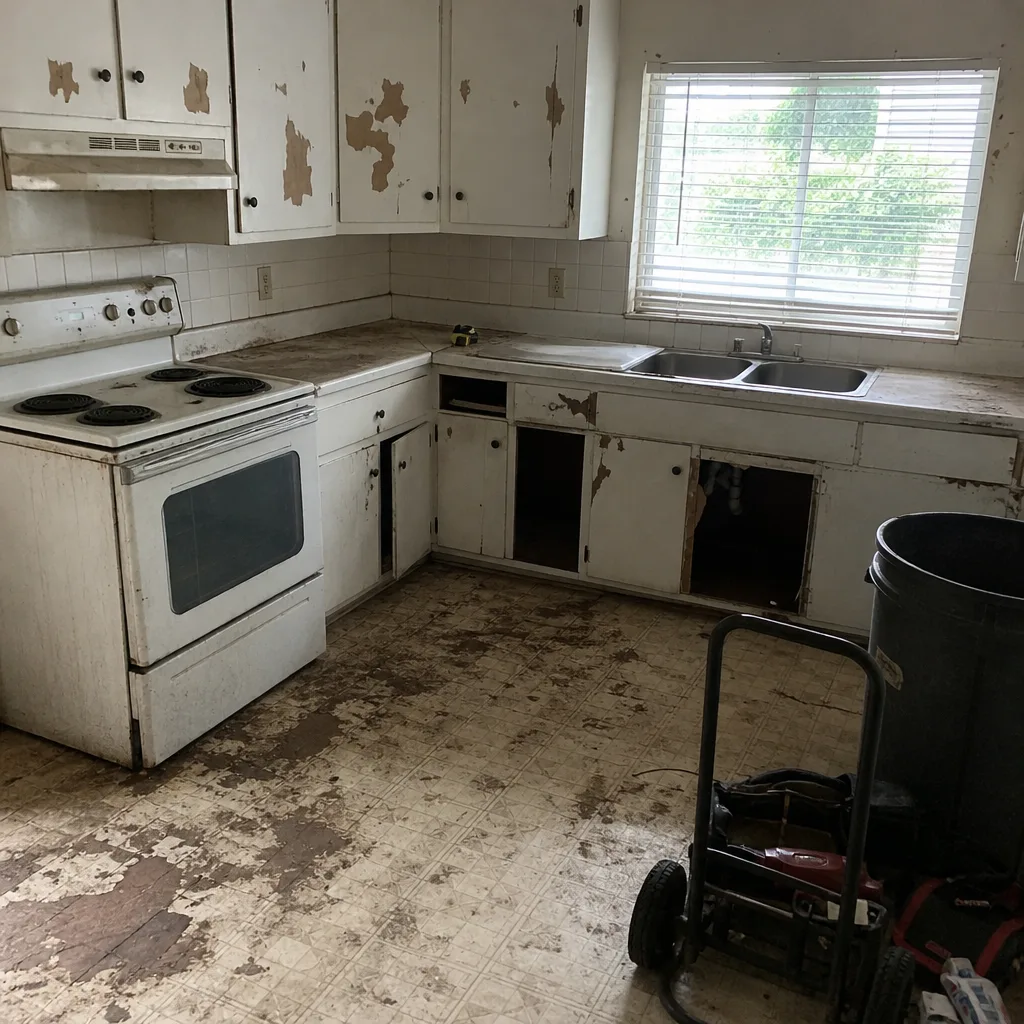 Before
 After
When to Call a Professional
Most items on this calendar you can do yourself: resealing grout, re-caulking, testing outlets, soaking the showerhead. Call a professional when the signs point past maintenance. If your toilet rocks or the floor around it feels soft, that’s a wax ring and probably subfloor work. If you see mold returning to a spot after two cleanings, or mold on drywall or under caulk, that’s moisture coming from behind the surface. If a GFCI won’t reset, that’s an electrician. If the exhaust fan pulls no air even after cleaning, the fix is likely ductwork or replacement, not a bigger cleaning job.
Barrett & Sons Construction Miami Gardens offers free estimates in Miami Gardens – call (844) 797-8316. Every eligible job we do gets permits pulled and inspections signed, and every price change arrives as a written change order before the work happens. If it isn’t done right, our 90-Day Done Right Promise brings Tom back on one call.
Frequently Asked Questions
Twice a year, once in spring before the rainy season and once in fall after it. The humidity and hard Biscayne Aquifer water here wear sealer down faster than the five-year interval national guides recommend. If you skip a season, reseal as soon as you remember – the grout will absorb water in the meantime.
A toilet that rocks slightly, a faint sewer smell in the bathroom, or a soft spot in the floor near the base. Any of those means water is likely getting under the tile, and the fix gets significantly more expensive the longer you wait. Call a plumber or bathroom contractor for a look.
Either the fan is undersized for the room or the duct is blocked, kinked, or venting into the attic instead of outside. The tissue test tells you if it’s moving air. If it holds a tissue and the mirror still fogs, it’s probably a duct problem, and that’s worth having looked at.
Often yes, for a specific reason. All three sell service parts for their fixtures, so a drip or a stuck handle is a cartridge replacement instead of a whole-fixture swap. They also publish maintenance terms that affect the finish warranty, so using mild cleaners instead of abrasives matters if you ever file a claim.
Once a month. Press TEST, confirm the outlet goes dead, press RESET, confirm it comes back. If it won’t trip or won’t reset, stop using it and call a licensed electrician. Testing takes under two minutes and is the highest-value item on the whole schedule.
Yes, and it starts the month the grout cures. A new install is built well, but the humidity, hard water, and salt air here operate on a schedule whether the bathroom is new or twenty years old. Sealing and caulk checks from day one are what keep a fresh remodel looking fresh.
The Bottom Line
A bathroom in Miami Gardens is a maintenance commitment from the day the last tile is set. The climate here – year-round humidity, hard aquifer water, salt air – puts the room under constant stress that a generic national checklist won’t prepare you for. Reseal grout twice a year. Check caulk quarterly. Watch the wax ring and the supply lines once a month. Test GFCIs on the first of every month. Keep the exhaust fan moving real air, and don’t assume the fixture brands don’t care – they do, and their warranties depend on it. Most of this takes minutes. The skipped items run into the thousands. If you want the whole schedule built into a remodel you’re planning, or you want a second look at a quote you’ve already gotten, our team can help.
Ready to talk about your bathroom? Call Barrett & Sons Construction Miami Gardens at (844) 797-8316 for a free estimate. A live person answers, day or night. We’ll walk your bathroom, write the scope and any allowance into the quote, and put the 90-Day Done Right Promise on the contract before a single nail moves.
Written by the team at Barrett & Sons Construction Miami Gardens.